

Owen Sound Council Rejects Intersection Safety Working Group; Collision-Update Motion Sent to a Cancelled Meeting
After a four-year-old was struck, residents asked for safety fixes. Council voted down an intersection study, and the meeting set to hear them is cancelled.

Council overturned the committee's recommendation on June 15. A second motion — a staff update on the streets where a four-year-old was struck — had been directed to the June 25 committee meeting, which the city then cancelled, leaving residents' concerns without a council venue until late July.
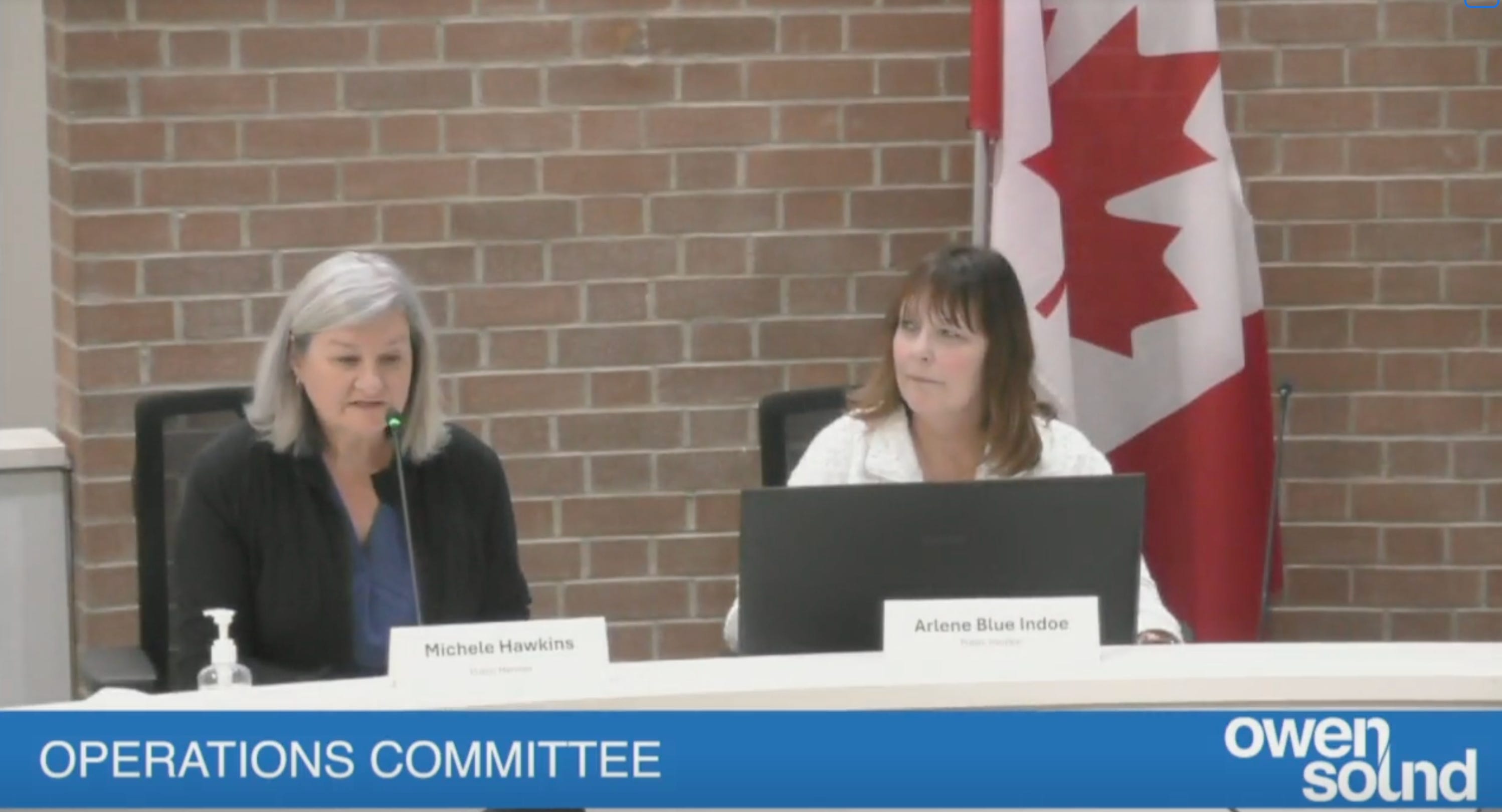
Owen Sound council has voted against creating a citizen working group to study the city’s three most collision-prone intersections, overturning a recommendation the Operations Committee made in May.
A separate road-safety motion — a request for a staff update on the streets where a four-year-old was struck — had been directed to the committee’s June 25 meeting, which the city has since cancelled.
The two questions had run through nearly the entire May 21 committee meeting, one driven by an immediate incident and the other by a policy proposal. A month on, neither has a path to council or committee action before late July: council defeated the working group, the city manager told council the policy question should wait for the next term, and the meeting set to take up residents’ concerns has been called off.
A child struck, and a request for answers
The incident behind the second motion was a collision at Alpha Street and 13th Street A West in which a four-year-old was struck.

Coun. Carol Merton raised it at the May 21 meeting and said residents and parents in the neighbourhood had written to the city with specific requests: a grass strip as a buffer, a designated community safety zone, an additional crosswalk on Alpha Street, and a crossing guard.
The city’s director of public works and engineering told the committee staff were aware of the collision and saddened by it, had responded to the residents who reached out, and were in contact with the Owen Sound Police Service, which is investigating.
Staff would wait for direction from police before identifying next steps, she said, and would review any suggestions through the city’s normal process.
Merton’s request for a follow-up report could not be handled as a simple ask. The committee chair noted that staff do not, as a rule, report back on individual collisions, and that directing staff to do specific work required a formal notice of motion.
Coun. Jon Farmer agreed on the process while raising a consistency point: the city has seen fatal collisions during this term without comparable requests for follow-up reports.
Merton filed the notice of motion, seconded by Farmer, for the June 25 committee meeting.
On June 16, the City of Owen Sound cancelled that committee meeting without giving a reason. The next Operations Committee meeting is July 23.
A working group — endorsed, then voted down
The policy proposal had a longer history. Farmer gave notice of his “crash analysis working group” motion in April. It would have directed the city, after the October 2026 election, to strike a three-to-five-member group in 2027 to examine contributing factors and potential safety measures at the three intersections with the most reported collisions in 2025 — 10th Street East and 9th Avenue East, with 15; 16th Street and 9th Avenue East, with 14; and 10th Street and 4th Avenue East, with 14 — and to report back in September 2027.
The group would have used the Crash Analysis Studio, a tool developed by the planning advocacy organization Strong Towns.
The Operations Committee endorsed the proposal 5-2 on May 21. Council deferred it on May 25, saying it wanted the city manager’s input on how the group would operate.
At the June 15 council meeting, the motion was defeated 4-3, with Coun. Travis Dodd absent.
Councillors who opposed it gave several reasons. Coun. Marion Koepke argued the city should trust its public works and engineering department to act when an intersection records too many collisions. Coun. Melanie Middlebro’ said launching the group now would tie the hands of the next council, questioned whether workable fixes existed for three signalized intersections she described as straightforward, and attributed most collisions to human error.
City manager Tim Simmonds — whose input the May deferral had been meant to secure — told council it would be better to let the council elected in October decide whether the issue is a priority.
Farmer argued the group would be low-cost and would draw on the experience of residents who use the roads daily, without committing council to any expensive fix. Merton supported it.
The debate over behaviour and design
The May debate had already mapped the disagreement. One committee member, who said he had driven Owen Sound’s streets for four decades, opposed the motion on the grounds that the main cause of collisions is driver behaviour, not intersection design; he pointed to the northbound right-turn-only lane at 9th Avenue and 16th Street East, and to drivers blocking the intersection at 1st Avenue West and 10th Street, as cases of motorists ignoring existing signage.
Farmer responded that he was not arguing design was the only factor, but that “design,” broadly understood, takes in signage, pavement markings, traffic-calming measures and lane widths — all of which shape how people drive. He cited a Strong Towns report drawing on 18 crash-analysis projects across North America.
Two newer members offered some support for the clarity argument, with one noting it had taken her a long time to learn the lane in question was right-turn-only, and another recalling that the designation had changed in recent years.
The most serious crashes aren't on the list
Whatever the working group might have found, its design would have missed the city’s most serious recent cases. The intersection where the four-year-old was struck is not among the three on Farmer’s list — a reminder that serious incidents are not confined to the locations that top the annual collision count.
Neither is the crosswalk at 10th Street East and 16th Avenue East, where 48-year-old Sabrina Ormsby was struck and killed in February while crossing with her daughter; an Owen Sound man faces a charge of careless driving causing death, which has not been proven and returns to court July 13.

Because the group’s list drew on 2025 collision counts, a fatal crash in early 2026 would not register on it. The study was built to find where collisions happen most often, not where the gravest harm occurs.
Where residents can still turn — and the next council
The traffic-calming policy is not the only avenue, though the formal ones are slow or self-started.
Residents can write to council or submit correspondence for a meeting agenda, and can request to speak as a deputation, heard first by the relevant committee.
They can also use the Neighbourhood Traffic Calming Policy (PRT-001), which lets residents — ideally with the support of at least half of an affected neighbourhood — ask the city to investigate traffic calming on a street. It works through education, then enforcement, then engineering measures, with physical changes such as speed humps treated as a last resort and easier to build into new road projects than to retrofit.
On the Alpha Street collision specifically, action does not hinge on Merton’s motion. The public works director told the committee staff would review residents’ suggestions through the city’s normal process and were waiting on direction from the police investigation, a track that continues regardless of what happens at committee.
Council itself pointed to one more avenue. In voting the working group down, councillors and the city manager said the question should fall to the council elected this fall.
That council will be chosen on October 26, and residents who want the issue pursued can put it to candidates before then.
Until the new council sits, council-driven action on the questions raised this spring waits on the July 23 committee meeting — if Merton’s motion returns there at all.
Related: