Between Our Steps: Buried in Snow
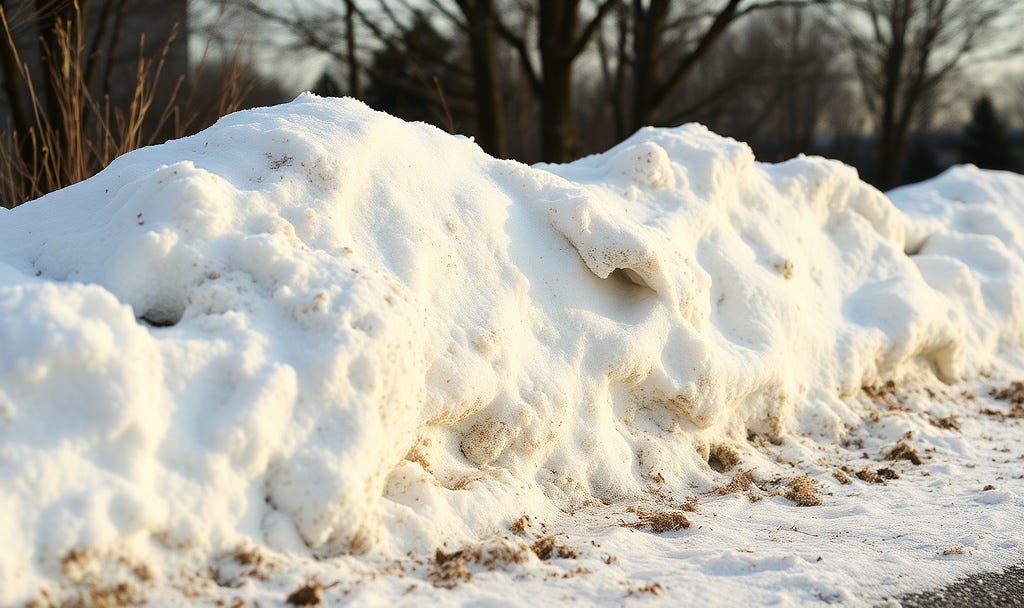
Whether trying to navigate on foot or by car, the massive volume of snow that buries Grey-Bruce in winter can be deceptive.
COMMUNITY CONTRIBUTION
A dusting of snow like sprinkled icing sugar on a Bundt cake. Not enough to shovel. Not enough to change the shape of the land. Just enough to hide the ice on the walkways. A warning to step carefully.
With a more significant snowfall, more is masked. Before the plow goes by, you can’t be sure where the edge of the road is. Now that I am walking in town, I have to feel for the curb, the edge of the sidewalk. And sometimes, even when the road has been cleared, the plow does not get close to the curb and finding it with half my foot throws me off balance.
With the snow that is piling up, it is hard to know what the side of the roadway is like. The ditch beside a country road may be full of snow. The shoulder where I’d like to walk is buried. In town, the sidewalk is cleared dumping snow on the edge of the road. The road is cleared sending snow back on to the sidewalk. Usually, I find a bit of sidewalk peeking through. If I don’t, I turn aside and try another route.
Yards are getting built up. Comparing the yard to the driveway, I can tell how deep the snow is. But my dog who thinks he has to be on the snow to pee, doesn’t know what to think. He jumps—or climbs—up onto the snow. Sometimes he sinks as deep as his legs are long and plows back down. Sometimes he finds it solid as the ground would be. That he likes.
Piles at the ends of driveways are starting to block the view. Is there a car coming? Hard to tell. And the thick blanket on the yards mask the features that we know so well from the rest of the year. A little bit of a retaining wall peeks through. Only the top of the low growing shrub can be seen. The rest is buried, protected from the cold, hidden.
In a field, the stubble and the yellowed strands of wild flowers have been buried by falling snow. Then, the wind comes up. In open places, snow is scoured away, the remnants of last summer revealed again.
But the wind also piles the snow. Where a fence post pokes up, the wind lays a snow shadow beyond it. Where there is a line of trees, a drift builds up on the leeward side. Only memory tells us the shape of the land below the drift. As I deal with drifts, the meaning of “leeward” feels ironic: it is the side protected from the wind, which is well and good in summer, but in snow, it is the side where any dangers are completely hidden, the depth of the drift unknown.
Then there are the drifts across the road. Driving along a bare road, I come to an open place and the road is white. How deep is the layer? How slippery is it? I slow down and hope the person behind me does too.
On a snowy day, when the road is white, I may not see the drift coming. Even if I do, it’s hard to know how deep it is. Memory is often the best guide: on familiar drives, there are places where snow always piles up, where I know I need to slow down.
Some years ago, after a three day closure on Highway 21, I drove carefully along the barely two lane opening. It felt like a tunnel. Snow was piled on either side two stories high. It felt nothing like the wide open stretch of highway that I knew.
There is a notorious section of Bruce Road 1 just outside of Paisley where open fields lead to the road becoming full of snow. Snow plows push the snow off the road and onto the shoulder and field beyond. But it can only push so far. The banks widen. Several times a winter, a massive snow blower is brought in to cut back the snow bank. The result is a cliff more than two stories high.
A person who only drives that road in winter would not know that the land to the west is flat as flat can be.
Thank you to sponsors of The Owen Sound Current Writers’ Fund, who make these community contributions possible. Contributions from the community do not necessarily reflect the opinions or beliefs of The Owen Sound Current and its editor or publisher.
Related: