

Vacant Property Tax, Boutique Hotels, Year-Round Season: Inside the Sauble Beach Strategy
A six-week peak season is the problem it sets out to solve. The plan proposes a vacant storefront tax, a new Town staff position and year-round programming.

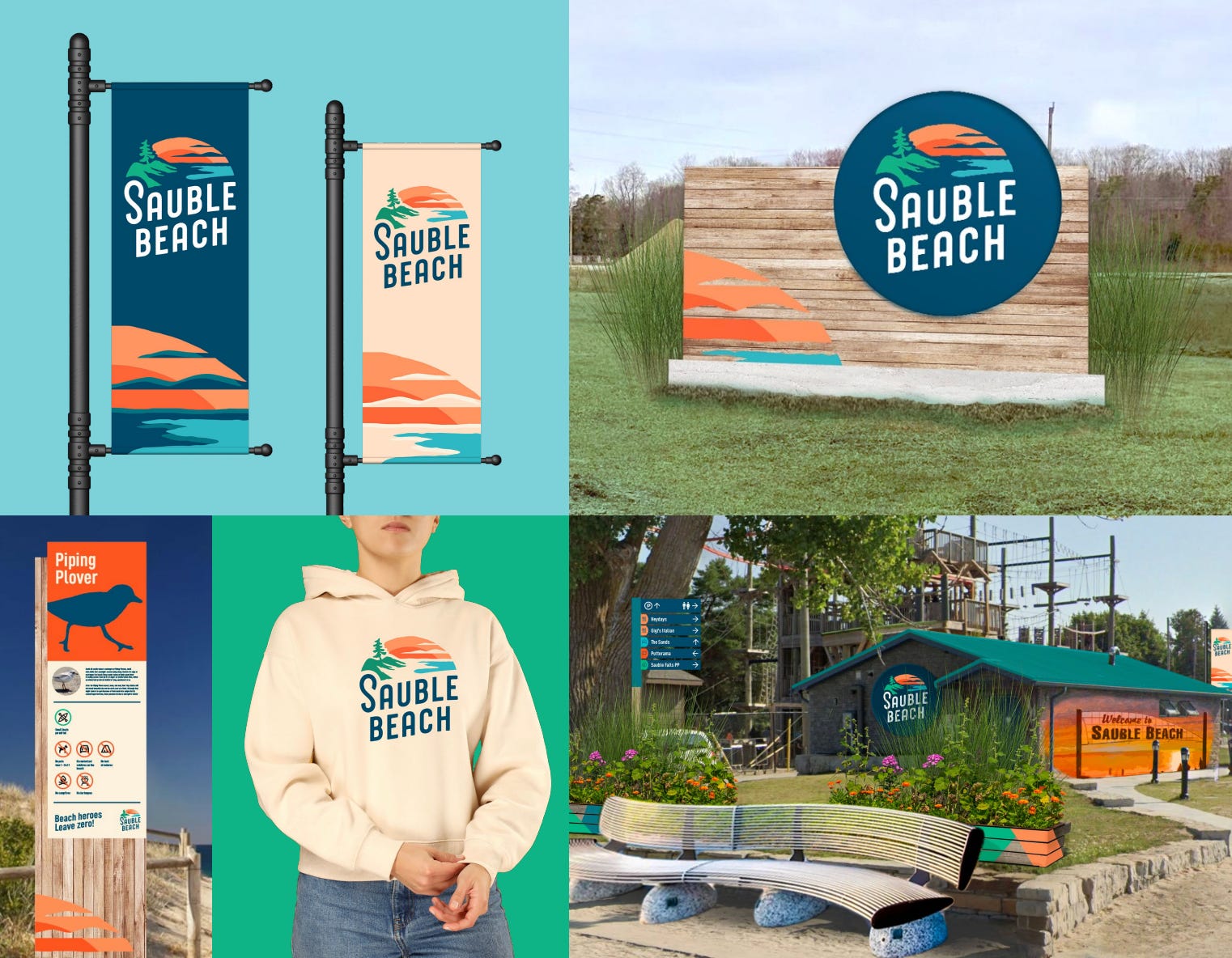
The Town of South Bruce Peninsula has released a new brand and economic strategy for Sauble Beach, the product of a year of consultation and the first refresh of the community’s brand since 2013.
It was paid for through the Municipal Accommodation Tax (MAT) — a mandatory 4% levy on short-term accommodations of 30 days or less — rather than property tax revenue.
Here is what it recommends and what it says about the community’s economy.
The core problem it identifies
Sauble Beach runs on a six-week peak season. The strategy treats that as the central structural weakness and measures every recommendation against a single test: does it strengthen the economy in October, February and on rainy days in July.
It describes a community with strong destination recognition and a world-class natural setting, but a narrow business mix, aging storefronts, and water and wastewater capacity that limits what can be built. It identifies spending leaking to Port Elgin and Southampton for everyday retail, and names Wasaga Beach as a competitor investing heavily in its own revitalization.
The approach it recommends is quality over quantity: more value from existing visitors rather than more visitors.
What kinds of businesses Sauble Beach wants
Food and beverage that functions as community gathering places: cafés, bakeries, specialty food retail, prepared meals.
Family entertainment that works in bad weather.
Health and wellness services, framed around an aging population and aging in place, with yoga studios, rehabilitation clinics and outdoor sauna and cold-water experiences rather than a large spa.
Boutique accommodation — renovated motels, cottage resorts, small inns — instead of resort development.
Distinctive independent retail. Guided outdoor and cultural experiences.
It also records what participants did not want. Food trucks were not viewed as an economic development opportunity, with concerns raised about limited long-term investment in the community, a smaller contribution to the tax base, fewer local employees, and spending diverted from year-round businesses.
Concrete proposals
A tax on vacant commercial properties is floated, alongside incentives to convert empty storefronts into pop-ups, galleries or mixed-use space.
Implementation gets its own machinery. A new Town staff position, funded from the MAT reserve, would carry the strategy forward, supported by a coordination table bringing together MATA, the Chamber and Bruce County.
An annual public scorecard would track downtown vacancy, new business openings and incentive uptake, and specify which work was paid for with MAT dollars and which with taxpayer dollars.
Signage and wayfinding in the downtown core and beach area would be rebuilt to the new brand standards, starting with the most visible locations, and landmark gateway signs would go up at entry points to the community.
Two other items carry costs. A servicing feasibility study for Main Street would establish what water and wastewater upgrades would run, and the Town would target at least two anchor events in each season outside peak summer.
On the beach and Saugeen First Nation
The Town says Saugeen First Nation is the rightful owner of 2.4 kilometres of sand beach bordering the downtown business district, now formally recognized as Saugeen Beach. The project covers the northern portion of the sand beach and the urban area of Sauble Beach.

The strategy identifies collaboration with the Nation as part of what could make Sauble Beach distinctive, and recommends exploring partnerships on Indigenous-led cultural experiences, interpretive programming and an Indigenous business and entrepreneurship pathway.
The Town lists ongoing conversations with Saugeen First Nation among its engagement activities.
Participants raised the naming question. The Town says Sauble Beach remains the community’s official name, and that a shorter “Sauble” was considered for marketing and rejected.
Engagement notes record an appetite for brand guidelines stating that Sauble Beach is a community and Saugeen Beach is a beach, and that together they form a destination.
How it was built
Engagement ran through March and April: 428 survey responses, 61 participants across four workshops, and 12 interviews. A second survey testing three visual concepts closed May 25.
The MATA Board identified the need for a rebrand and initiated the project. The Sauble Beach Chamber of Commerce was engaged afterward.
Council budgeted $75,000 for the work, drawn from the Municipal Accommodation Tax reserve. The money was originally approved in the 2026 capital budget to design and install a new Sauble Beach sign, and staff recommended reallocating it in December, arguing that with the beach formally renamed, future signage should follow a settled community identity rather than come first.
The contract was awarded to Tante Consulting Inc. at the February 10, 2026 Council meeting, with Terrilyn Kunopaski as project lead.
Staff told Council in December that the strategy would be complete in May, in time for the 2026 tourist season. The Town said it took additional time to engage stakeholders rather than rush the work, and that the August timing lets Council consider implementing priorities during 2027 budget deliberations.
More information and project updates available on the Sauble Beach Destination Marketing, Branding and Economic Positioning Strategy webpage.
Related:


