
Ruff Hosts Local Beef Farmers as Canada-Mercosur Trade Talks Advance
Bruce-Grey-Owen Sound MP Alex Ruff and MPP Paul Vickers met with local beef farmers urging Ottawa to keep beef out of the Canada-Mercosur trade agreement.

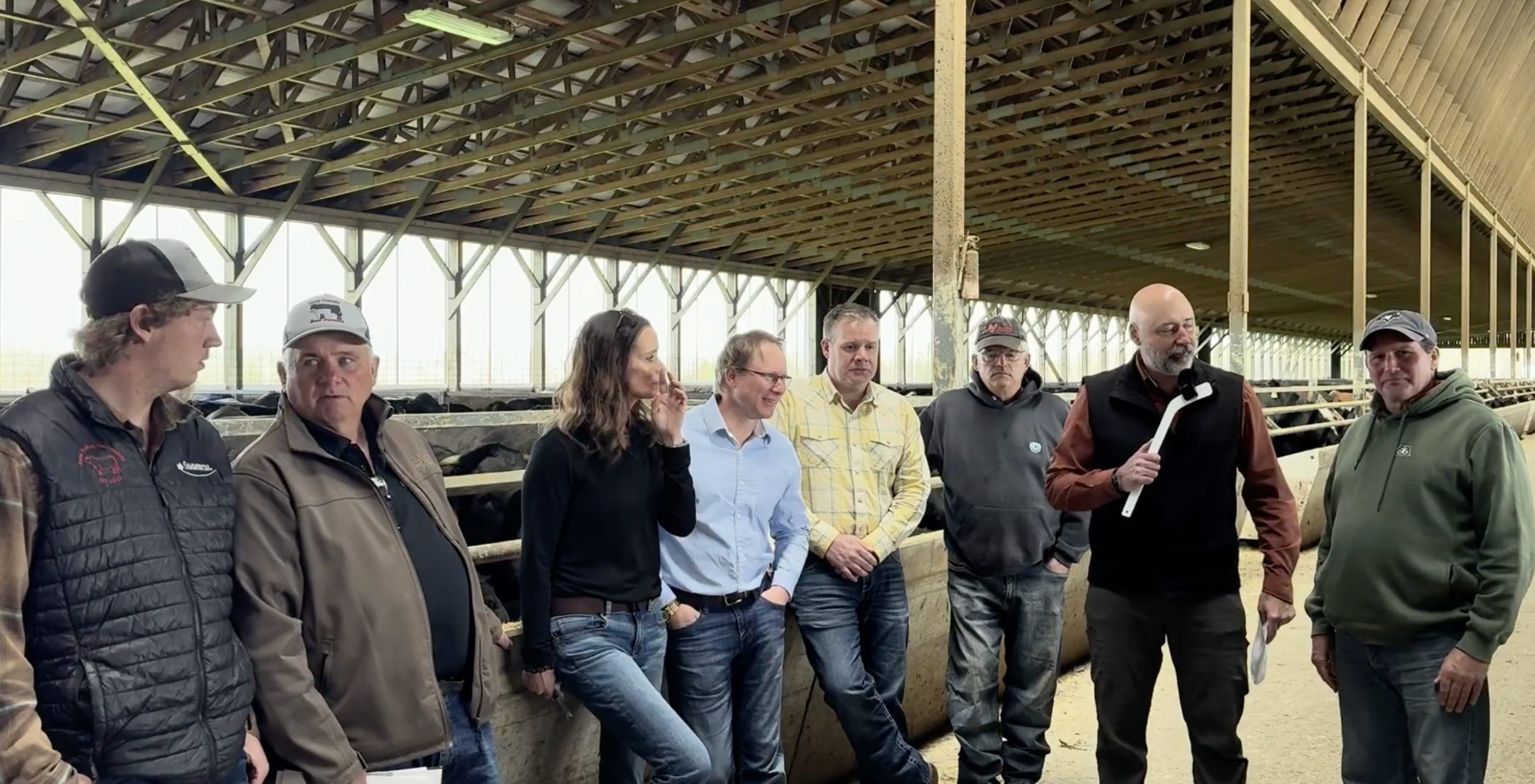
Bruce-Grey-Owen Sound MP Alex Ruff met with local beef farmers in the riding on Saturday, May 16, to discuss the proposed Canada-Mercosur free trade agreement and what producers say it could mean for their sector, according to a release from Ruff’s office issued Tuesday.
The meeting was held at Pallister Farm in Dundalk, according to a May 12 advisory from Ruff's office announcing the event. Tuesday's follow-up release did not say how many producers attended, or whether any federal officials, opposition critics or representatives of Beef Farmers of Ontario (BFO) took part.
Ruff recorded a video discussion with participating farmers, which has been posted to YouTube. Bruce-Grey-Owen Sound MPP Paul Vickers (PC), a Meaford-area dairy farmer, also attended and spoke in the video.
The agreement
Canada and Mercosur — a South American trade bloc whose members are Argentina, Brazil, Paraguay and Uruguay (with Bolivia acceding to full membership) — first launched free trade negotiations in March 2018. Talks stalled in 2021 and were relaunched after Canada and Mercosur agreed last year to restart them. (The Globe and Mail)
According to Global Affairs Canada, two-way merchandise trade between Canada and Mercosur totalled $15.8 billion in 2024, with Canadian exports at $3.1 billion and imports at $12.8 billion.
The Globe and Mail also reported, citing three government officials from Canada, Argentina and Brazil, that the deal could be signed by the end of 2026, with another round of negotiations scheduled for Brasilia, and that one source said talks could be wrapped up before September.
Canada's Minister of International Trade, Maninder Sidhu, has said both sides are aiming to negotiate roughly every six weeks with a goal of reaching agreement by the fall of 2026.
That timeline differs from the one cited by BFO in an April 15 statement, which said Ottawa was advancing the file on an accelerated schedule “with completion expected potentially as early as June.”
Ruff's release pointed readers to the BFO statement but did not address the discrepancy.
What beef producers say
BFO, the provincial industry association representing Ontario beef producers, opposes the agreement in its current direction.
In its April 15 statement, the association said a Canada-Mercosur deal “offers little to no value for Canada’s agri-food sector” and argued that expanded access for imported beef would “undercut domestic production and displace Canadian product,” particularly in Ontario, where it says most imported beef is sold.
BFO also said the deal would place “significant downward pressure on domestic prices” at a time when the industry is working to rebuild the national cow herd. Those claims are the association’s own; the Owen Sound Current has not independently verified the projected price or market-share impacts, and the federal government has not published a sector-specific impact assessment for beef under the current round of negotiations.
In Ruff’s video, Don Hargrave — introduced by Ruff as representing local beef producers — said the industry’s position is not blanket opposition to the trade deal.
“This is not about opposing trade. Ontario beef farmers support fair and balanced trade,” Hargrave said. “But trade agreements cannot be at the expense of Canadian food production and long-term stability of our farms.”
Hargrave said producers are “calling on the government to reject any additional beef market access in the Mercosur agreement.”
He told the camera that imports currently represent 30% of Canadian beef consumption and “typically more than 40%” in Ontario. The Owen Sound Current has not independently verified those figures.
Hargrave also said the federal government is attempting to finalize the agreement “by the first of June” — a timeline that matches BFO’s April 15 statement but differs from the fall 2026 target publicly cited by federal trade officials and reported by Reuters and The Canadian Press.
For his part, Vickers raised concerns about precedent from past trade deals.
“We’ve seen [it] over in Europe,” Vickers said. “There’s been a couple deals made over there that we haven’t gained the access that we were hoping to, or that we were promised, but we gave up concessions in other areas.”
The Ford government has publicly identified Mercosur as a region for expanded trade.
In an April 30 release, Premier Doug Ford and Economic Development, Job Creation and Trade Minister Vic Fedeli identified the Mercosur bloc as one of the regions where Ontario is “working with the federal government” to expand trade, alongside the Asia-Pacific and Middle East, framing it as part of the province’s strategy to diversify away from U.S. reliance amid American tariffs.
The release did not mention beef or agriculture, and Ontario’s agriculture minister was not quoted. The Owen Sound Current has not located any subsequent Ontario government statement addressing the concerns raised by BFO or Ontario beef producers regarding the Mercosur talks.
What is not yet known
Global Affairs Canada’s public materials on the Mercosur file describe potential tariff reductions of up to 35% on Canadian exports in sectors including automotives, industrial machinery, chemicals, plastics, forestry, medical goods, pharmaceuticals and aluminum.
The department’s public-facing pages do not detail what, if any, market access concessions Canada is offering on beef imports, whether tariff-rate quotas or sectoral carve-outs are under discussion, or what consultations have taken place with the cattle sector specifically.
A federal consultation on the resumption of Canada-Mercosur negotiations ran from December 13, 2025 to January 27, 2026. Submissions received through that process have not been made public.
Related:


