

Bruce County Wants Out of a Conservation Authority That Reaches to Lake Simcoe
Council went past what staff recommended, formally opposing the geography of the proposed Lake Huron authority and the single seat Bruce County would hold.

Bruce County Council has formally rejected both the shape and the governance of the conservation authority the province intends to create on this shoreline, going further than its own staff had recommended.
At its August 6 meeting in Walkerton, council amended a staff report on the floor to add three positions: that it opposes the geography of the proposed Lake Huron Regional Conservation Authority, that the region should be divided into two separate authorities, and that it objects to the level of representation Bruce County would hold on the new board.
Council also directed staff to circulate the resulting letter to every conservation authority and every municipality in the proposed region — upper and lower tier both.
The original motion, tied to Report GR-2026-034, had directed staff only to submit prepared comments to the Ministry of the Environment, Conservation and Parks under Environmental Registry posting 026-0740. The amendment was moved by Councillor Jay Kirkland and seconded by Deputy Warden Don Murray. It carried, as did the main motion as amended.
Bruce County to have just one appointment on a board of 22
The representation figures drove the debate.
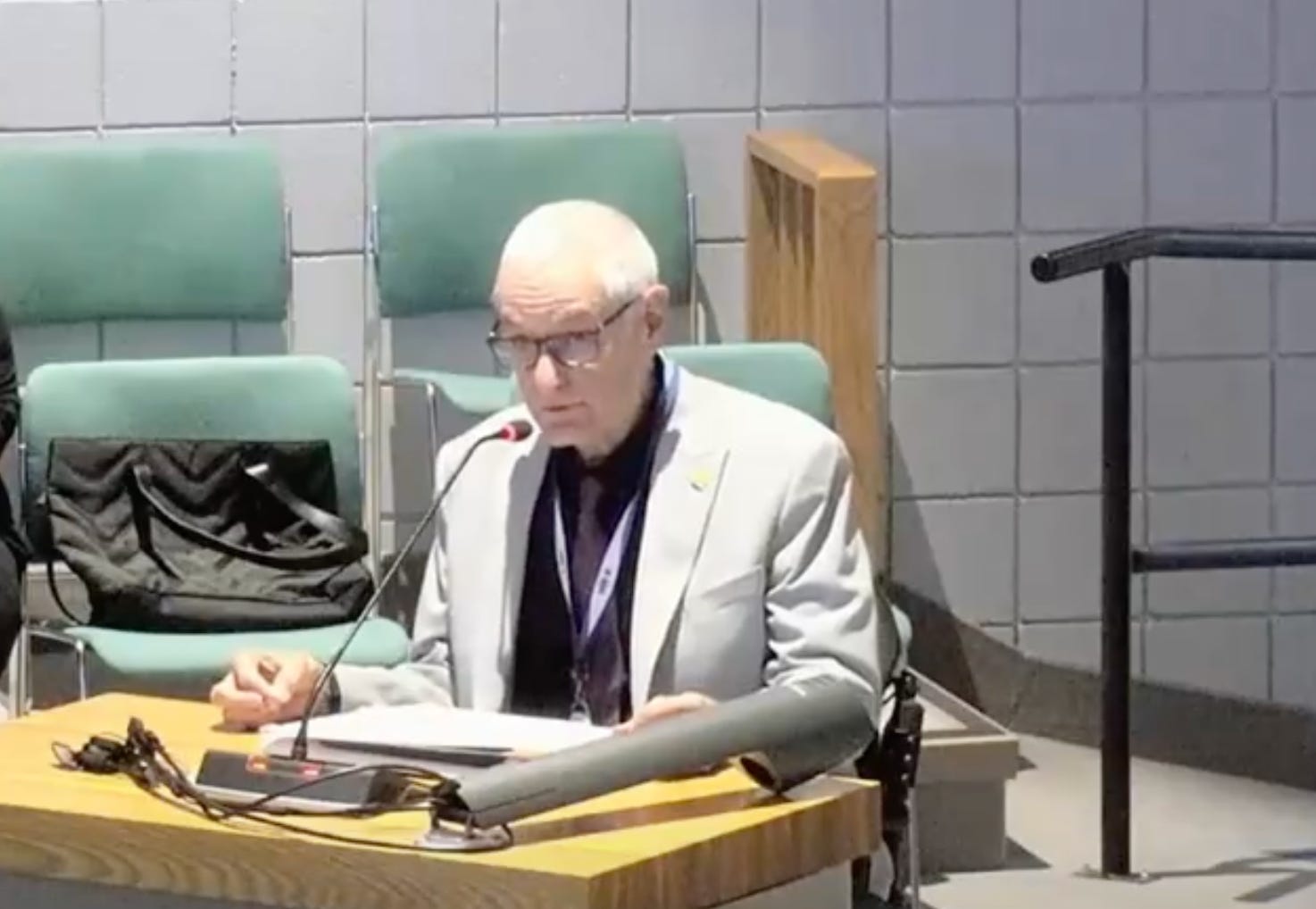
Ed McGugan, chair of the Maitland Valley Conservation Authority and a councillor in Huron-Kinloss, told council he had received an update from the ministry days earlier showing Bruce County with one representative on a 22-member regional board. Huron County would also have one.
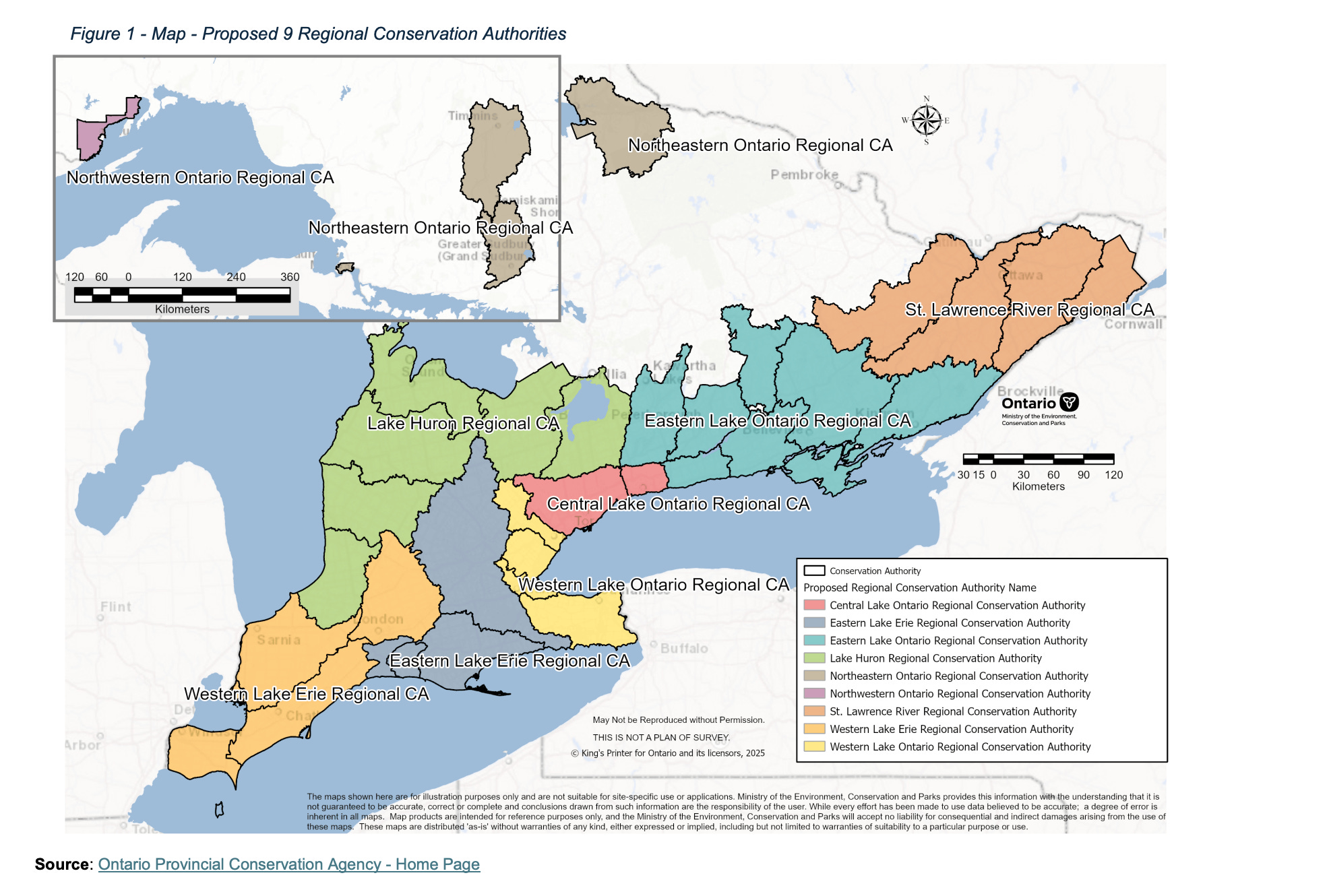
The Lake Simcoe region, he said, would hold 11 or 12 — a majority on its own.
The county’s director of government relations confirmed separately that staff had been working from estimates when the report was drafted and had since received the actual allocation, with Bruce County still at one appointment.
Councillor Chris Peabody, mayor of Brockton, told council the allocation could not be accepted, pointing to municipalities with far smaller land areas receiving the same single seat.
Murray said the shoreline counties needed more representation regardless of how it was achieved.
Charbonneau framed the problem as arithmetic: as long as Bruce County is grouped with large urban populations, a representation-by-population model will leave it with a small voice. A smaller authority, he argued, is the only route to a larger share.
A councillor who criticizes conservation authorities, and opposes the merger anyway
Peabody described himself as a vocal critic of conservation authority overreach in southern Bruce and said he had fielded years of complaints from farmers. He said practices in the sector had contributed to the case for amalgamation. He also said he had not met a constituent who believes the change will improve anything.
One councillor raised the opposite argument — that a larger region containing denser, wealthier areas might help fund conservation work in a rural county with fewer ratepayers. Craig responded that Lake Simcoe operates under its own provincial legislation with its own water quality obligations, which could see money flow east rather than west.
Charbonneau’s answer was that amalgamation is unlikely to reduce what Bruce County taxpayers pay under any structure, which leaves representation as the only variable worth fighting over.
Province’s plan “appears to have more layers of red tape, not fewer.”
McGugan told council the new model adds administrative layers rather than removing them. Where there are currently two — the ministry and 36 conservation authorities — he counted four under the new structure: the ministry, the Ontario Provincial Conservation Agency, nine regional authorities and a layer of regional or watershed advisory boards.
He said Maitland Valley returned permits to clients in an average of 5.7 business days in 2025 and questioned whether a provincial agency would match that.
He also raised transition costs. The provincial agency’s executive director has said the cost of running transition meetings should be minimal; McGugan said his authority expects otherwise and believes the province should pay, given that the restructuring is a provincial initiative. He said the timeline is tight enough that no meaningful due diligence will be possible.
Maitland Valley has begun holding pre-transition meetings with the other affected authorities, McGugan said, to try to establish rural priorities before the province’s own transition process begins.
His request to council was that it communicate directly with provincial representatives, cabinet ministers and the premier, and that at minimum the Lake Huron region be split so that it is genuinely a Lake Huron region.
Murray told council Huron-Kinloss has a delegation going to the Association of Municipalities of Ontario conference on the issue, with the Huron County warden and other Huron councillors joining. He said one Huron County community has taken the position that if it has no say in the new authority, it does not want to fund it.
Background
The province announced on March 10 that it intends to consolidate Ontario’s 36 conservation authorities into nine regional bodies, with Grey Sauble, Saugeen Valley, Maitland Valley, Ausable Bayfield, Nottawasaga Valley and Lake Simcoe Region merged into a single Lake Huron Regional Conservation Authority stretching from Lake Simcoe to roughly Port Franks.
The province has said transition begins in 2026 and the regional system takes effect in February 2027, after the municipal election, with the province appointing the chair of each transition committee. Board members would be appointed by upper-tier municipalities rather than by the lower-tier municipalities that appoint them now.
There is at least one precedent for the province adjusting the map under pressure. The Lakehead Region Conservation Authority, originally slated for amalgamation, was left as a standalone body after public opposition and will instead be renamed.
Bruce County staff will submit the amended comments to the ministry under the Environmental Registry posting and circulate the letter to the affected conservation authorities and municipalities.
McGugan’s presentation and the ensuing discussion are available to view on Bruce County’s website.
Related:


