
Where Did All the Birds Go?
Peter Middleton checks the grasslands north of Owen Sound for returning migrants this spring — and finds the birds, once abundant, are disappearing.

COMMUNITY CONTRIBUTION
An essay by Peter Middleton for the NeighbourWoods North Series
No matter where you are, day or night, when you read these words, skies above the planet are thronged with birds on the move. Each is a thread in a global pattern called migration. Spring migration is underway.
All of us have witnessed and celebrated the phenomenon, whether it is the arrival of the first robin in spring, or the undulating skeins of clamouring geese heading south in fall. But birds are disappearing!
Modern birds appeared approximately 155 million years ago. Over time, the process of continental drift created the Western Hemisphere. A vast range of ecosystems evolved providing birds with a diversity of limitless resources to exploit. Seasons expanded the scope of those resources on a cyclical basis, absent in the tropics. Having the capability of flight, birds were quick to adapt and utilize the opportunites and expand their ranges. Seasonal migration was worth the demands required.
Distances and challenges undertaken by migrants are truly astounding. For example, Ruby-throated Hummingbirds undertake flights that average up to 1,600 km, including an 18-20 hour, non-stop crossing of the Gulf of Mexico. Despite such demands, migration has proven to be a highly successful evolutionary strategy for the countless species and individuals involved.
Sadly, our world is changing. Unchecked human population growth, has unleashed habitat loss, climate change, desertification, pervasive pollution. The planet is no longer an “Eden” in the void of space. This heritage is being avariciously attacked.
Recently, I checked grasslands north of Owen Sound to see which, if any, migrants had returned this spring. A single male Bobolink perched atop an isolated patch of waving grass. There was no evidence of any other displaying males, or females, requisites for successful colonial breeding.
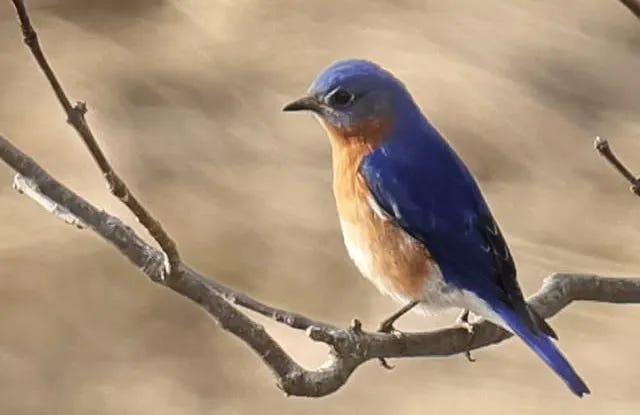
A solitary Wilson’s Snipe displayed in the sky above; normally, there would be three or four. A similar bleak picture applied to a forlorn Eastern Bluebird, sitting alone on a man-made nesting box.
Until recently, these three species were found abundantly, occupying pastures that offered countless opportunities for nesting and feeding.
Modern agriculture transforms natural habitats: wetlands are drained, forests felled, hedgerows ripped up. Expansive monoculture replaces biodiversity; as habitats disappear, species decline and eventually vanish.
Migration no longer provides an advantage. Evolution has insufficient time to react.
Through the ages, the planet’s natural bounty has sustained humanity and a richness of species. It has provided us beauty and joy. Sadly, society has chosen to pursue a path of unrestricted development, at nature’s cost. Our heritage may soon exist only as memories!
Birds will continue to disappear. Does it matter?
“The beauty and genius of a work of art may be re-conceived, though its first material expression be destroyed; a vanished harmony may yet again inspire the composer; but when the last individual of a race breathes no more, another heaven and another earth must pass before such a one can be again”
William Beebe (The Bird, 1902)
Thank you to sponsors of The Owen Sound Current Writers’ Fund, who make these community contributions possible. Contributions from the community do not necessarily reflect the opinions or beliefs of The Owen Sound Current and its editor or publisher.
Related:


