
What Are Tiny Forests & Why Is Everyone Planting Them?
Six Miyawaki-style Tiny Forests have been planted across the region in three years. Volunteers explain how the dense native plantings work.
COMMUNITY CONTRIBUTION
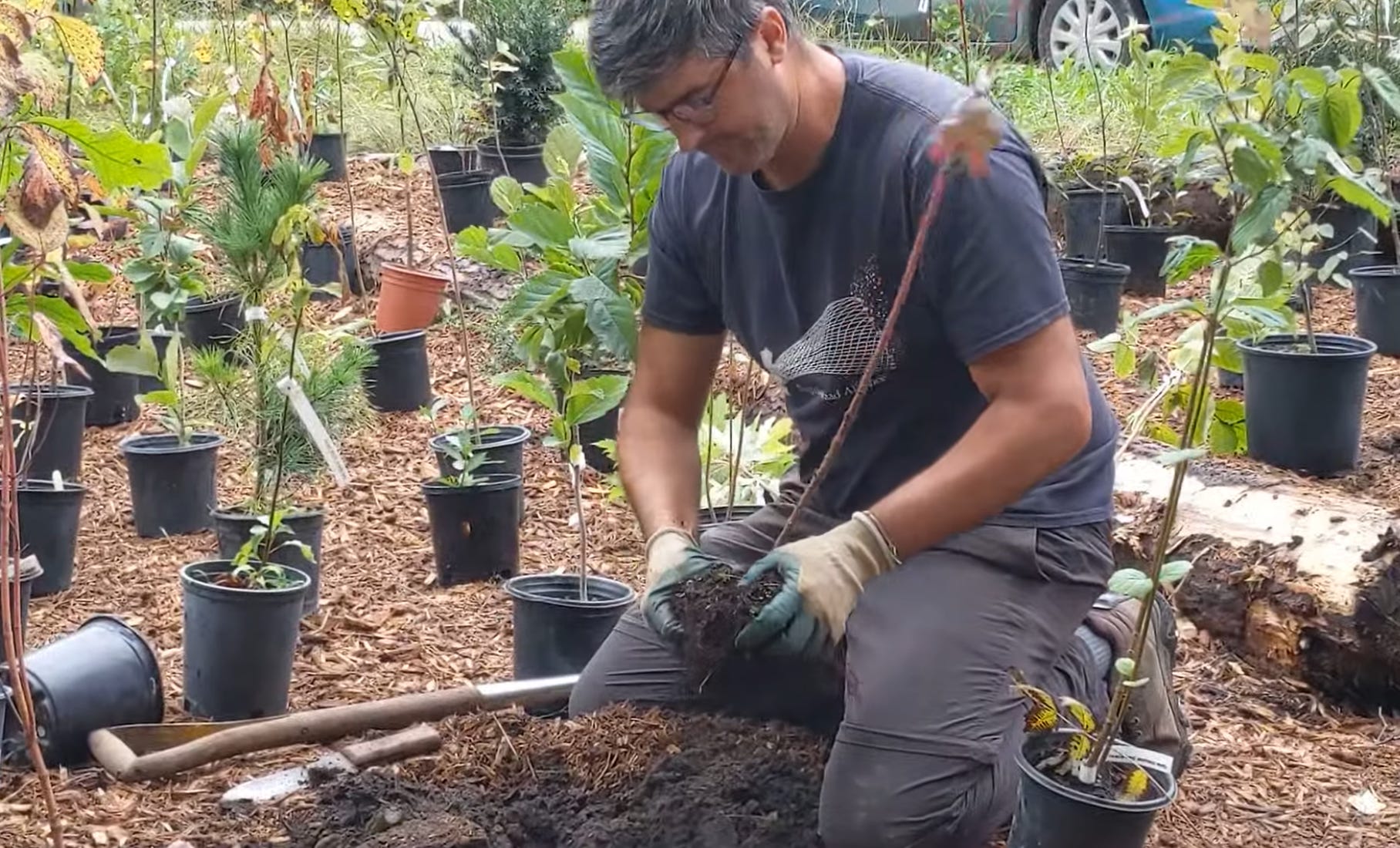
Submitted by Leigh Grigg and Beth Anne Currie, volunteers with The Sustainability Project and part of a group who led and installed the Tiny Forest at the Peninsula Shores District School in Wiarton.
“Tiny Forest” describes a tree planting design that covers an area about the size of a tennis court where native trees and shrubs are planted with high density and diversity, according to early pioneer, Professor Akira Miyawaki from Japan.
Trees within a Tiny Forest (or mini-forest) grow more rapidly than other plantations —to form a living oasis or a biodiversity “hotspot” within urban or degraded areas.
In Wiarton, a Miyawaki Tiny Forest was planted in 2023 at the local school. Alongside the planting, a bioswale was designed to capture stormwater runoff, slowing it down for the plants to enjoy and filtering out contaminants from the asphalt parking lot.
The main functions of a Tiny Forest are:
Adds local plant and animal biodiversity in urban areas,
Decreases the impact of climate change,
Increases access to nature for people to enjoy.


Another primary goal at the Wiarton Miyawaki Tiny Forest was to:
4. Create a sustainable, outdoor educational learning lab, where students can observe changes in biodiversity over time.
Volunteer Nick Assad was involved in the Wiarton Tiny Forest planting and its after care.
“The best moment was seeing the broad diversity of plants arrive at the Wiarton site,” recalls Assad.
“I remember saying hello to them because once you recognize the native plants of southern Ontario from hiking, they’re easy to ID, and they’re like old friends. We’re not used to seeing all the species gathered together joyfully like that in preparation to be planted.”
In our region, there have been 6 Tiny Forests planted in the past three years:
Mooi Nature Preserve by Escarpment Biosphere Conservancy (EBC) - 2026
Neyaashiinigmiing by Bagida’waad Alliance - 2024
Moreau Park in Thornbury by Climate Action Now Network (CANN) - 2025
Georgian Bluffs Township Office in Springmount - by Township of Georgian Bluffs -2026
Bayshore Community Centre by students attending Youth Climate Action Conference (YCAC) -2025
Peninsula Shores District School in Wiarton by The Sustainability Project - 2023
Challenges
The primary challenge is finding a landowner who will commit to it in perpetuity.
Finding a dedicated host or group to ensure that the project is prioritized over the first few years is also vital: watering the new plants during their first couple of summers and managing (removing) plants like wild mustard, bindweed or coltsfoot, that grow quickly from buried seeds in the soil or compost, is a time-sensitive job. Never underestimate the role of thick mulch!
A fence can relieve pressure from deer, rabbits, beavers and even some humans. It’s comforting to know that strong species like oak and hickories can withstand being occasionally grazed.
What species to plant?
Last month at the Mooi Nature Preserve south of Owen Sound, Escarpment Biosphere Conservancy (EBC) installed a mini forest designed in a clearing, to add native woodland plants to a dry area.
Species were selected by referencing the National Tree Seed Centre’s “eco-region” for plants that would thrive in these specific conditions.
Local Expertise
Last week at the Georgian Bluffs Township office in Springmount over 50 staff participated in planting their own Tiny Forest thanks to local experts like Julie Lamberts at Rooted By The Bluffs, a local native tree nursery. The new trees will also shade council chambers and reduce cooling costs.
Lamberts practices permaculture and her enthusiasm is shared by her friend Assad from the Wiarton planting.
“With any relationships we seek to create, it’s about spending time together and building friendships,” continues Assad, who is also a landscape architect and ecologist. “Spending time with people, plants, and even the land, just start with saying hello or some small talk. The idea is subtle but fuses through everything in our lives including how we treat our environment.”
“We are indeed relational beings.”
This is the eighth in a series of monthly columns on a range of local environmental topics written for The Owen Sound Current by volunteers with NeighbourWoods North and other local climate action groups.
Thank you to sponsors of The Owen Sound Current Writers’ Fund, who make these community contributions possible. Contributions from the community do not necessarily reflect the opinions or beliefs of The Owen Sound Current and its editor or publisher.


