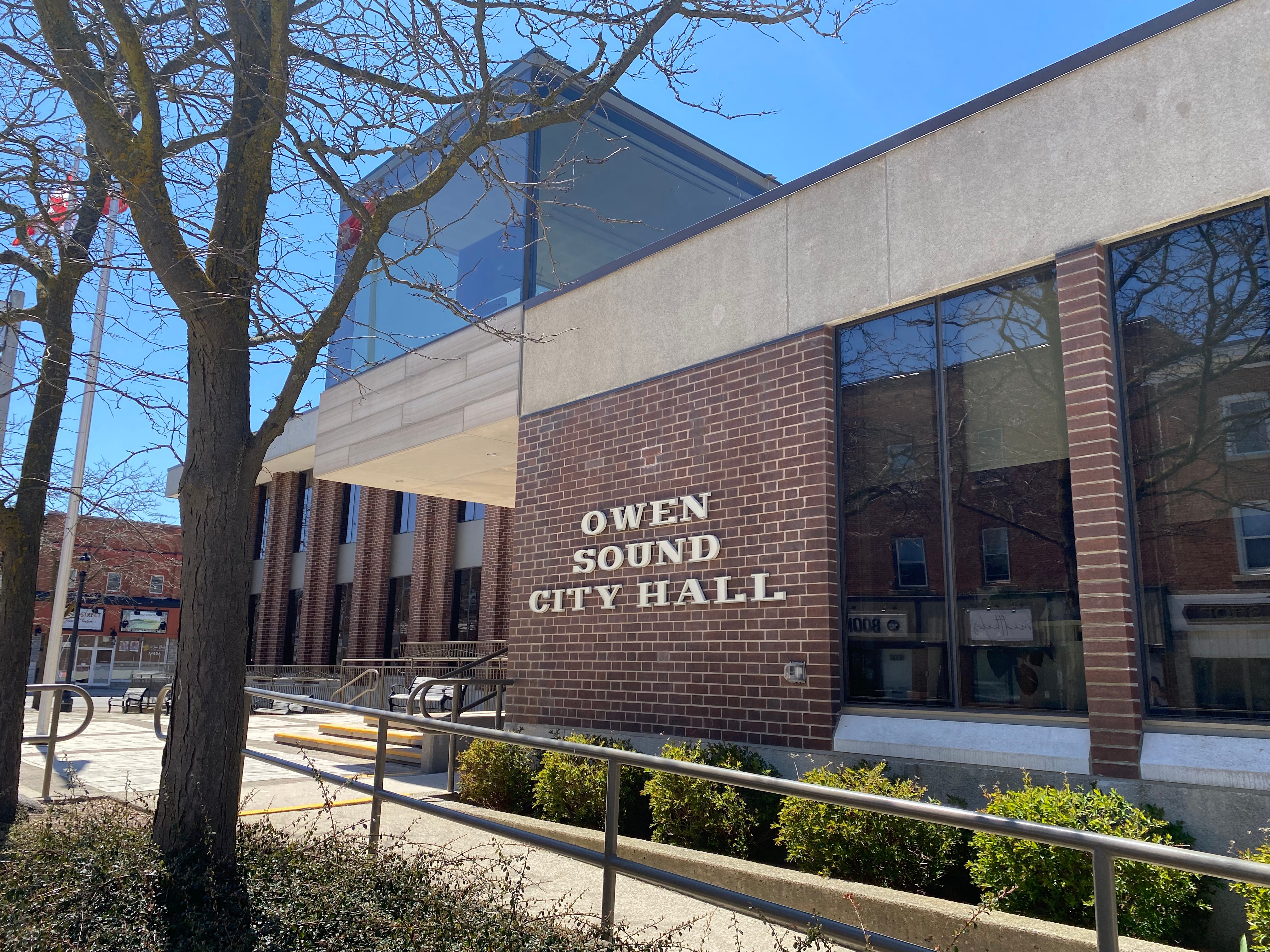
TTAG Advisory Committee Weighs In As Council Considers Restructuring or Combining Committees
Gallery advisors and the Police Board have shared feedback and raised concerns about oversight, continuity, and public participation as Owen Sound reconsiders its committee structure.
Members of the Tom Thomson Art Gallery (TTAG) Advisory Committee had a wide-ranging discussion Tuesday about proposed changes to the City of Owen Sound’s committee structure, offering feedback on the rationale, implications, and process behind a governance review currently underway.
Their input is part of a consultation requested by City Council, which in 2024 directed staff to assess whether the existing committee structure aligns with Owen Sound’s new Strategic Plan.
Staff presented six options for City committee structures to Council in December, and are presenting the options to committees at their meetings. Committee feedback is being gathered throughout January, with a final report returning to Council in February 2026.

If changes are approved, a new committee structure would take effect in early 2027.
“There is no right or wrong way to structure municipal committees,” Deputy Clerk Briana Bloomfield told the committee. “Each municipality does this differently. The goal is to find a structure that supports transparent, inclusive governance and aligns with Council’s priorities.
Notably, there was no indication during the presentation that Council plans to hold a public meeting or broader community consultation on the committee structure options before making a decision.
And while the staff report presented to council in December connects the review to the City’s Strategic Plan refresh and references the Vision 2050 project as part of the rationale, the Vision 2050 community survey did not raise the topic of committee structure as an issue for public input.
That omission was not addressed during the TTAG discussion, though some committee members questioned the clarity and purpose of the process.
“What Was the Problem?”
Early in the meeting, committee Vice Chair Peter Tovell asked: “What were the problems or issues that triggered this review in the first place?”
Bloomfield explained that it had been several years since the City last reviewed its governance model, and that Council said it wanted to ensure the committee system aligns with the new Strategic Plan.
She also noted that challenges in attracting public members to some committees — particularly Corporate Services — may be contributing to the review.
However, feedback from former committee members may point to issues not in how committees are structured, but whether Council appreciates the time, energy, and expertise made available to them by members of the public who volunteer in this way.
The City’s ‘Boards and Committees’ webpage states that:
“Committees exist to obtain public input and give advice to Council based on each committee's mandate.”
Bloomfield noted that anonymous “exit surveys” the City has been sending outgoing committee members reveal concerns, including a lack of schedule flexibility, confusion around the role of public members, and limited opportunities for open discussion.
Some respondents reported expecting more space for collaboration, idea sharing, or constructive critique, and felt they were asked to approve reports with limited opportunity to provide input.
“It wasn’t driven by a crisis,” added Deputy Mayor Scott Greig, who chairs the TTAG Advisory Committee. “But the way committees function has changed over time — from meetings in a basement boardroom to livestreamed sessions — and it’s a chance to ask if the current format still works.”
Still, some members, including Tovell, indicated they found the process difficult to follow, especially in terms of how the options presented relate to specific problems or goals.
Six Options Under Consideration
The six models under review range from modest to transformative:
Maintain the current structure, with enhancements
Transition to two committees, broadly aligned to strategy
Create three new committees based on core functions
Establish a four-committee model
Create seven specialized committees
Move to a Committee of the Whole format, where all councillors sit on a single body
Some options under consideration could see advisory committees like TTAG absorbed into broader committees that cover multiple topics, such as culture, recreation, or community services.
Gallery-Specific Concerns: Focus and Funding
Committee members expressed particular interest in what restructuring could mean for the art gallery, which is both a cultural institution and a City-owned facility with specific operational needs.
Director and Chief Curator Aidan Ware flagged a potential impact on eligibility for provincial funding, particularly from the Ontario Arts Council.
“They have historically required a dedicated gallery advisory committee for operating grants,” Ware said. “We’ve been told that criteria may be changing, but until we know for sure, that remains an important factor.”
Councillor Marion Koepke and other members voiced similar concerns, suggesting that amalgamating TTAG into a broader committee could dilute the gallery’s focus and make recruitment harder.
“I’m here because this is a committee dedicated to the gallery,” said member Lynda Montgomery. “If that focus disappears, I wouldn’t necessarily be interested in a broader committee that isn’t centred on art.”
“If you already struggle to get public members, this is one place where people can hang their hat — knowing exactly what they’re signing up for,” she added.
Public member Kelsey Starr challenged the assumption in the staff report that broader committees would increase engagement:
“That seems backwards to me. If you expand the scope, it muddies the focus, and that muddies the interest.”
Bloomfield acknowledged that the gallery’s current bylaw includes a dedicated artist seat, and said that requirement could be carried into any new structure if Council chooses to retain it.
Police Board Urges Caution on Term Changes, Citing Oversight Risks
The TTAG Advisory Committee was not the first to weigh in on Owen Sound’s proposed committee structure changes.
The Owen Sound Police Services Board (OSPSB) chair had already submitted a formal letter of response, included in Council’s December 15, 2025, agenda, raising detailed concerns about how reduced term lengths could impact police oversight and governance.
In the letter, OSPSB Chair John Thomson acknowledged the City’s intent to standardize appointments across all committees but argued that applying this approach to the Police Services Board overlooks its unique legal obligations under the Community Safety and Policing Act (CSPA).
“Unlike other committees, the Board has specific governance and legislated reporting requirements… which require a degree of stability and continuity,” Thomson wrote.
He noted that recent changes to provincial legislation have increased reporting and training demands, meaning more frequent turnover could lead to gaps in oversight and added burden on police staff.
Thomson cautioned that reducing all terms to two years—including public appointees—could result in “three new members every two years,” significantly increasing the onboarding workload and disrupting continuity.
He also pointed to the practical challenge of delayed provincial appointments, which could result in vacancies or loss of institutional knowledge.
While supportive of rotating membership to bring fresh ideas, Thomson recommended keeping the current structure: one four-year term for a Council representative, a second two-year rotating Council seat, and a four-year term for the public member.
He also advocated for the creation of a dedicated board support role to preserve operational knowledge and compliance continuity.
Thomson concluded by warning that “to knowingly create a system that erodes oversight at a time when new legislation and recent incidents demand increased oversight may not be in the best interests of the service.”
Public Input in Finance and Governance Questioned
One proposal on the table involves creating a Finance and Governance Committee made up entirely of Council members. While meetings would be public unless dealing with confidential matters, public members would not participate directly.
Tovell and Koepke both raised concerns about losing valuable public expertise in financial discussions.
“In my experience with larger boards,” said Tovell, “finance and governance committees are often composed of people with relevant expertise who report back to the full body. That can be a much more effective way of working.”
Koepke added that community input during budget and service review processes often leads to practical recommendations — something that could be lost if public voices are removed from the conversation.
Committee Term Lengths and Turnover
Staff believe shorter terms could reduce barriers to participation and encourage more applications, Bloomfield reported.
However, Montgomery and Tovell expressed mixed views. While shorter terms might improve onboarding, members said it’s difficult to contribute meaningfully in such a short span unless continuity is maintained through reappointments.
Under current rules, public members can serve up to six consecutive years, with a possible extension to nine by a two-thirds vote of Council.
Operational Impacts and Historical Lessons
TTAG committee members also reflected on how committee changes might affect staff time, decision-making efficiency, and public engagement more broadly.
Koepke cautioned against assuming that consolidating committees would reduce workload: “In a structure with fewer but broader committees, the same staff might be pulled in to speak on a wider range of topics. It’s not obvious that it will save time.”
She also noted that a committee-of-the-whole format, previously used by Owen Sound, often slowed the decision-making process, as formal Council approval still needed to follow initial committee discussions.
Next Steps
The TTAG Advisory Committee was one of several bodies being consulted as part of this phase of the governance review. Staff said they are compiling feedback from all committees, with a consolidated report expected to return to Council in February 2026.
If Council decides to adopt a new model, the earliest it would be implemented is February 2027.
Bloomfield reiterated that the consultation process is intended to be open-ended and driven by feedback. “We’re still early in the process. Council asked for this review to hear from the people who participate in our committee system. Nothing is decided yet,” she said.
Related: