Township of Chatsworth Joins Growing Opposition to Province’s Conservation Authority Overhaul
Chatsworth Council has formally opposed Ontario’s plan to merge conservation authorities into seven regional bodies, warning it would erode local control, increase costs, and jeopardize watersheds.

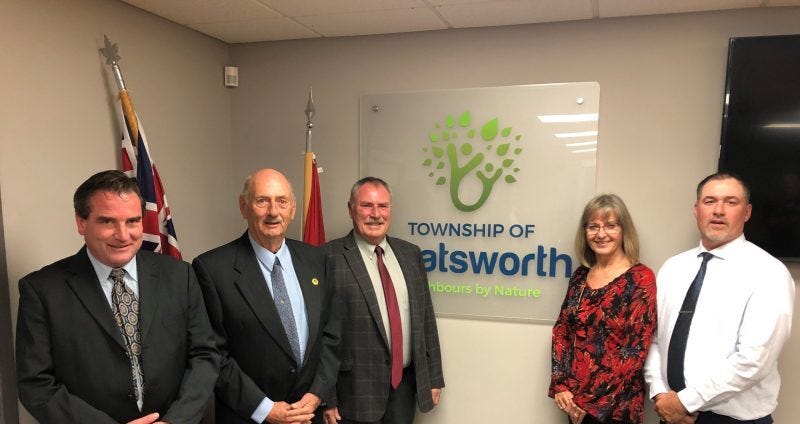
The Township of Chatsworth is pushing back against the Ford government’s sweeping plan to dismantle Ontario’s 36 locally governed conservation authorities and consolidate them into just seven regional bodies — a move the Township says would erode accountability, disrupt community partnerships, and divert funds from frontline watershed services.
In a resolution passed at its December 17 meeting, Chatsworth Council firmly rejected the province’s proposal to absorb Grey Sauble Conservation Authority (GSCA) into a massive new entity called the Huron-Superior Regional Conservation Authority, which would stretch across more than 23,000 square kilometres and encompass 80 municipalities.
That resolution will be presented to Grey County Council as part of its consent agenda this week.
“This proposal lacks sufficient justification, would significantly diminish local governance, and fails to recognize the effectiveness and efficiencies already achieved within existing watershed-based models,” Chatsworth stated in its resolution.
The Township is calling on the province to abandon the consolidation plan and instead strengthen existing systems through stable funding, consistent digital tools, and better centralized standards — all without dismantling locally rooted agencies like GSCA.
Local Knowledge, Local Control
Conservation authorities in Ontario were established by municipalities to manage water and environmental risks within their watersheds. GSCA, formed in 1985 through the merger of two local agencies, has operated for decades under a governance model designed and funded by local municipalities.
Chatsworth emphasized that GSCA is already delivering results. In 2024, the authority processed 100% of major permits within provincial timelines and has modernized much of its information technology and planning systems — progress the Township says directly contradicts the government’s justification for restructuring.
“Large-scale regional consolidation is unnecessary,” Council said. “It would introduce substantial transition costs and divert resources away from the very programs that protect our land and water.”
The Township also expressed concern about the fate of thousands of hectares of conservation lands, many of which were donated by residents under the condition of local stewardship.
It warned that rolling GSCA into a larger regional body would break the trust built with landowners and donors, and weaken the ability of municipalities to direct how conservation dollars are spent.
Funding Unclear, Representation Unknown
One of the biggest unknowns remains funding. Under the current model, GSCA receives about 44% of its budget from municipalities and just 7% from the province.
With the new Ontario Provincial Conservation Agency set to oversee the regionalized system, Chatsworth is asking the province to clearly explain how municipalities will be expected to fund operations, and who will make those decisions.
Council is also seeking clarity on representation. With 80 municipalities potentially governed under a single regional board, it’s unclear how much influence small rural communities like Chatsworth would retain.
“We support provincial goals for consistent permitting and digital modernization,” the Township said, “but imposing a new top-down structure without strong local accountability and governance risks creating unnecessary cost, red tape, and bureaucracy.”
Backed by GSCA’s Own Concerns
Chatsworth’s concerns echo those raised last month by Grey Sauble Conservation Authority itself, which warned the province’s plan would compromise service delivery, reduce environmental oversight, and risk the loss of local control over conservation lands and funding.
As previously reported by Owen Sound Current, GSCA noted that much of its programming — including flood forecasting, watershed monitoring, and agricultural stewardship — depends on local knowledge and swift response times. A centralized model, it cautioned, could delay action, erode trust, and disempower municipalities.
Next Steps
Public consultation on the proposed consolidation closed December 22, 2025. The Ministry of Environment, Conservation and Parks is expected to review feedback and bring forward legislation in early 2026.
In the meantime, Chatsworth is sending its resolution to the Premier, the Environment Minister, all Ontario municipalities, local MPPs, and conservation authorities — urging a course correction.
“We are calling for meaningful engagement,” Council said, “and for changes that reflect local needs and the practical realities of implementation — not top-down restructuring that threatens everything communities have built.”
Owen Sound Current will continue to follow developments as this story unfolds.
Related:


Thank you Chatsworth council - and the many municipalities who spoke up- for spelling out the manifold problems and governance deficits, which would result from the reduction and amalgamation of 36 Ontario Conservation Authorities overseeing delineated watersheds to just 7 massive regions on remote control. I was so shocked that the Province not only came out with this outrageous proposal, but also to brazenly asked the citizens of Ontario on the Environmental registry how to best do this, presuming that it is a done deal, while not explaining themselves in any way how to justify the move.
Going to ERO now, the proposal does not even show up. Does this mean the Province understands that citizens are not going for this overreach, that takes away governing structures developed over decades, financed and administered largely regionally ? Locally overseen CA.s are more needed now than ever.