

There’s Something Fishy About Sunday’s Ice Rescue Near Owen Sound
Sunday’s dramatic ice rescue on the bay between Balmy Beach and Cobble Beach has sparked questions about risk, responsibility, and whether costly emergency responses should ever be billed.

EDITORIAL OPINION
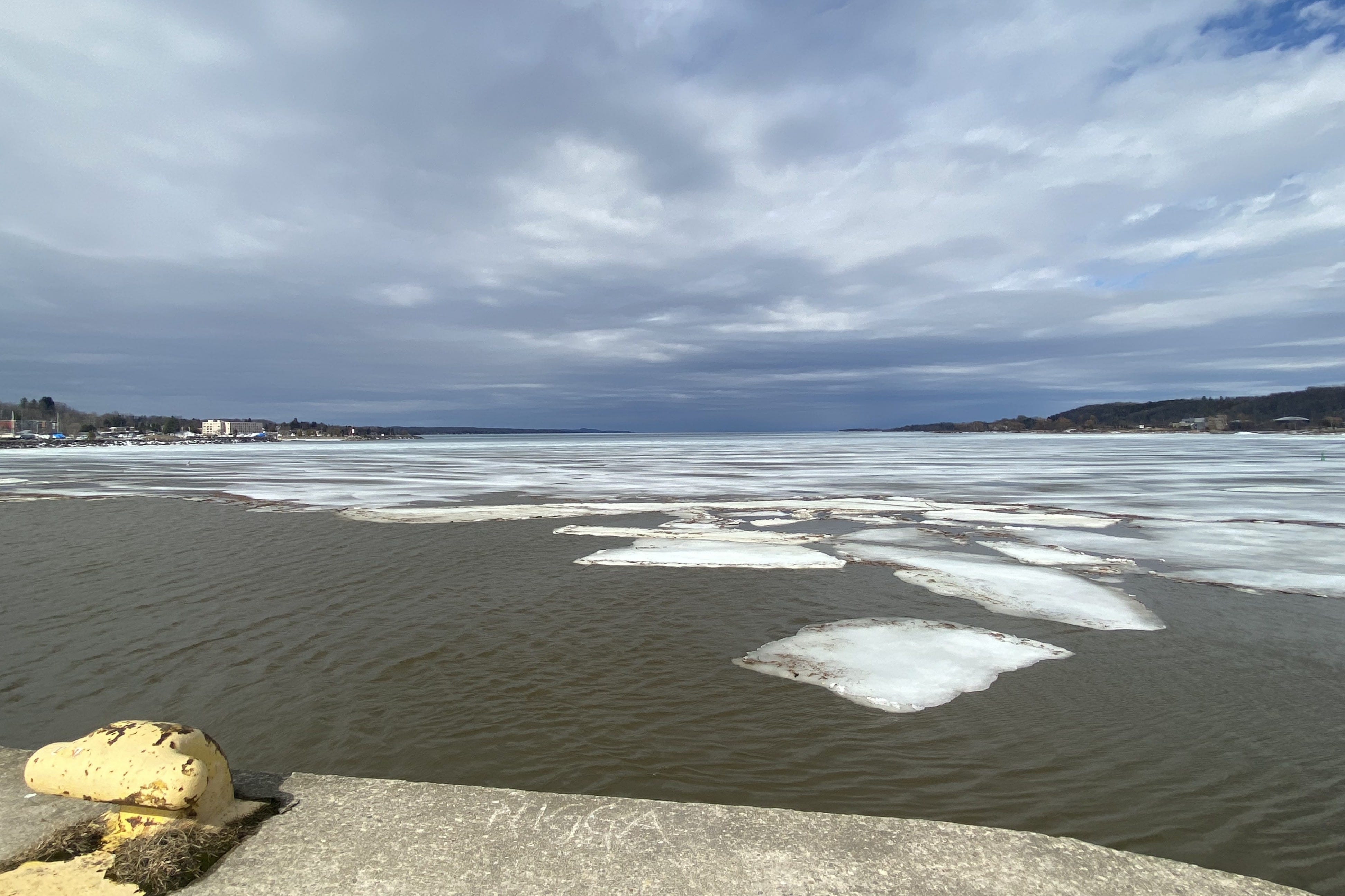
Sunday’s marine and aerial ice rescue on the bay between Leith, Balmy Beach, and Cobble Beach was dramatic to watch unfold.
The Inter Township, Owen Sound, Meaford, and North Bruce Peninsula fire departments all responded. Hanover Fire brought a rescue boat. OPP sent their Aviation and Marine units, and officers responded from Grey-Bruce and Wellington detachments. Ambulances from both Grey County and Bruce County paramedic services lined the driveway outside the Cobble Beach Clubhouse, where a makeshift command centre was set up. The Ministry of Natural Resources and Ornge showed up to assist.
Emergency crews worked in difficult conditions to bring stranded anglers safely back to shore after shifting ice left them trapped hundreds of feet from land. It is truly a testament to their skill and experience that so many agencies came together so quickly and no one was seriously injured.


Since then, some aspects of the incident have begun to raise questions — not only about what led to 23 people being on the ice that afternoon, but about the conduct of some of those involved.
Several of the anglers rescued have been highly active on social media since the event, describing their experience and presenting themselves as experienced ice fishers.
Some have posted videos of the rescue itself and spoken publicly about the experience. While several have thanked the first responders who came to their aid, the tone of much of the online commentary has struck some observers as surprisingly casual — even celebratory — given the scale of the emergency response.
One fishing “influencer” has been posting videos of the rescue itself, which quickly began circulating widely online, while another individual who advertises himself as a fishing guide has posted numerous videos in recent months of fishing on thin ice around Ontario — sometimes even tagging them with the hashtag #dangerous.
Neither appears to be from the immediate area.
That alone does not make them irresponsible. But their own posts, and their comments in media interviews, raise questions about what they knew before venturing onto the ice that day.
One of the anglers involved acknowledged in comments to Greg Cowan of the Owen Sound Sun Times that the group had already encountered unstable conditions.
“We crossed a couple of good cracks, so we were kind of already aware these cracks could open and were trying to keep an eye on them,” he said.
He also said he understood why people might question the decision to be out there in the first place, adding that the group had hoped the crack would shift toward shore rather than out into the bay.
The conditions leading up to Sunday were hardly subtle.
More than 50 millimetres of rain had fallen. Temperatures had remained above freezing for several days. Flood warnings had been issued. Ice floes were visible moving through local rivers feeding Georgian Bay.
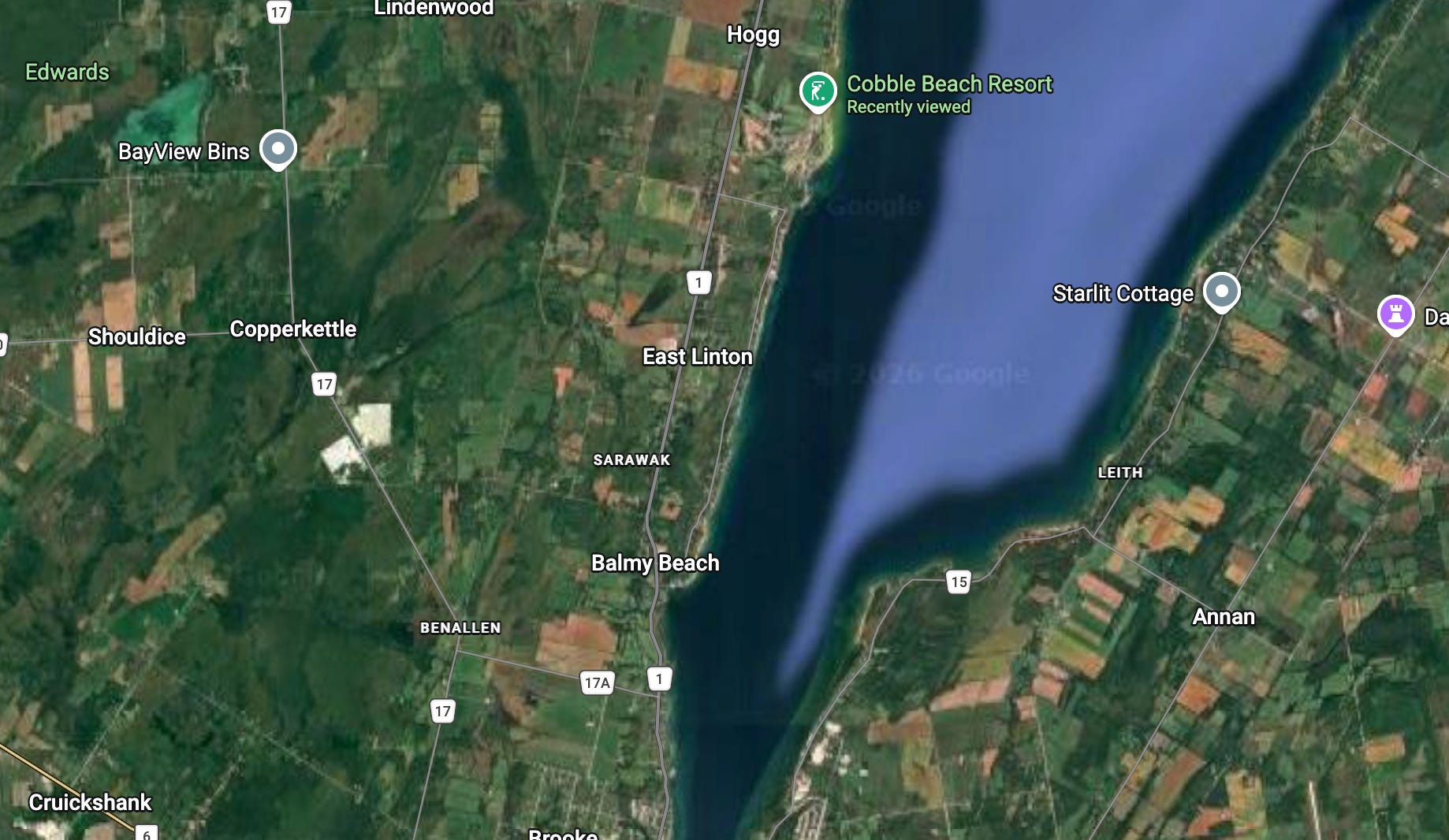
Strong southwest winds were pushing water and ice around, while open water was already visible in parts of the bay.
In other words, this was not a typical mid-winter ice fishing day.
That reality has not gone unnoticed locally. Across community social media groups and comment sections, in coffee shops and on street corners, many residents have expressed frustration that such a large emergency response was required under conditions that appeared risky long before anyone stepped onto the ice.
Those first responders — firefighters, paramedics, police, and aviation crews — are publicly funded resources meant to be available when emergencies happen. But situations like Sunday’s make it difficult not to ask whether this emergency was avoidable.
So the question people are now asking is a fair one: who should bear the cost when people knowingly take significant risks?
Ontario generally does not bill individuals for search and rescue operations, but it’s not unprecedented. In the Township of Scugog, in 2013, an ice fisherman who called 911 after getting stranded on deteriorating lake ice received a bill from the municipality for about $5,400, including charges for fire trucks and firefighter time under the local fee schedule.
He fought the charge, but it was confirmed by the municipality (they did give him the option of making a donation to charity, instead).
The reasoning against fining or charging people for rescues is sound. People in genuine distress should never hesitate to call for help because they fear being handed a bill.
But incidents like this one inevitably test that principle.
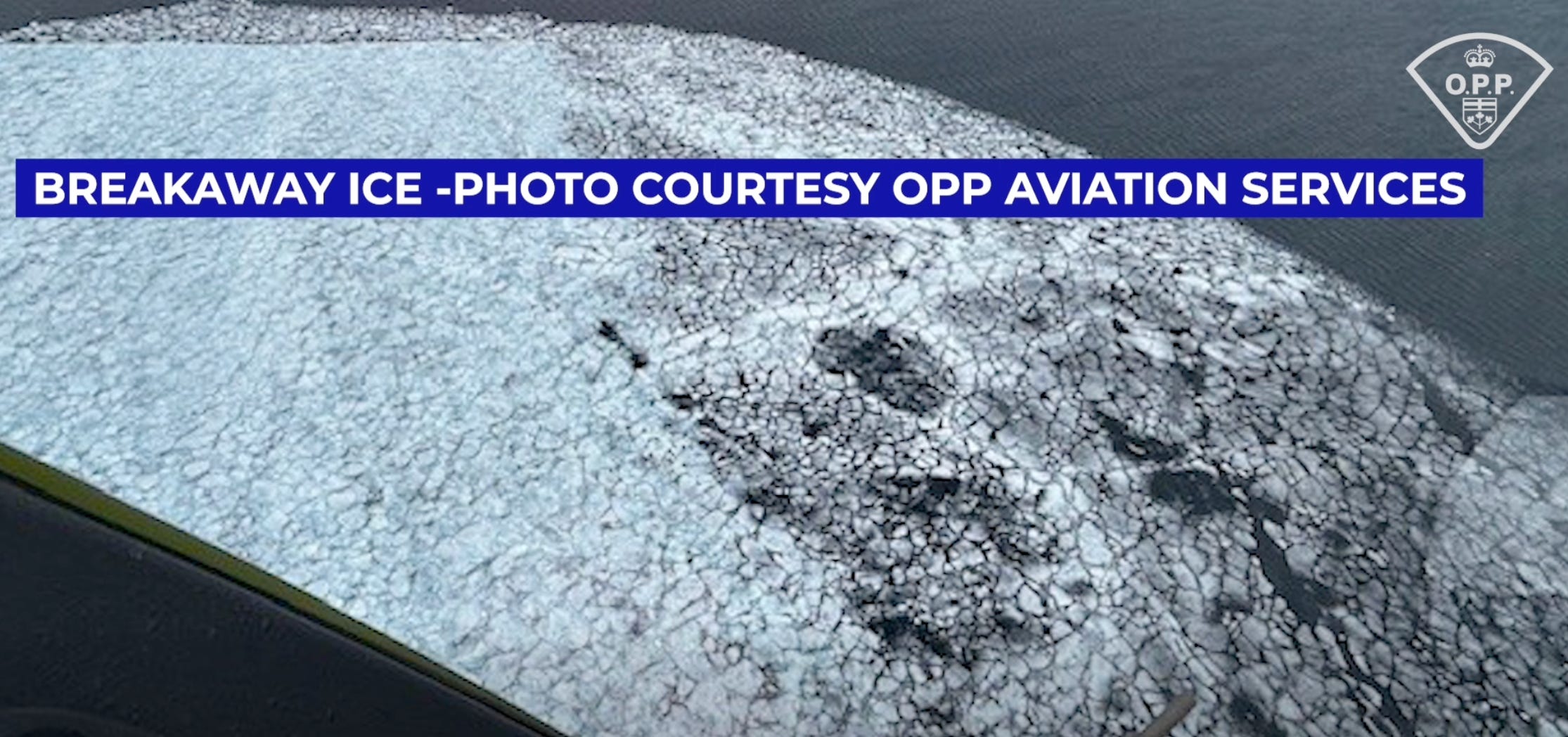
When experienced outdoors enthusiasts — particularly those who promote their activities online while presenting themselves as experts — appear to venture onto the ice despite conditions many recognized as dangerous, it raises questions about who really bears the risk and cost when things go sideways.
Their public reaction since the rescue has only deepened that concern, leaving some wondering whether the experience will change behaviour at all.
This isn’t about shaming people who needed help. Rescue crews did exactly what they are trained to do, and everyone involved should be grateful for their professionalism and skill.
But the broader conversation about risk and accountability is worth having.
Outdoor recreation always carries risks. Most people who fish, hunt, snowmobile, or explore Ontario’s waterways understand that.
Yet with expertise — and with an audience — comes a degree of responsibility, as well.
Because when the ice finally gives way, it isn’t only those who took the risk who pay the price.
We’ve submitted questions to local leaders and plan to continue this conversation. In the meantime, have your say:
Full subscribers can comment below, and as always, we accept letters to the editor up to 500 words at: owensoundcurrenteditor@gmail.com
Related:


We get charged for an ambulance ride to the hospital. I think there are exceptions but I had to pay when I went. The cost is only a small portion of the total cost of the service. So, the people rescued should have to pay, at least a portion. It would seem reckless to step over cracks in the ice. I usually stay off the ice since I don't know how to assess its stability. The thickness can be measured but that requires going out on the ice. It seems that they took unnecessary risks.
Most people who live in this area would have thought it highly dangerous to be out on the ice that day. The rescue operation was swift and successful. It also brought together all the emergency resources in the region. The cost would have been enormous. Perhaps it could be written off as a training exercise. But this is what a community response entails. I feel that at the very least those who were rescued are grateful, and owe something to the community resources that saved their lives. Through donations or volunteer work.