
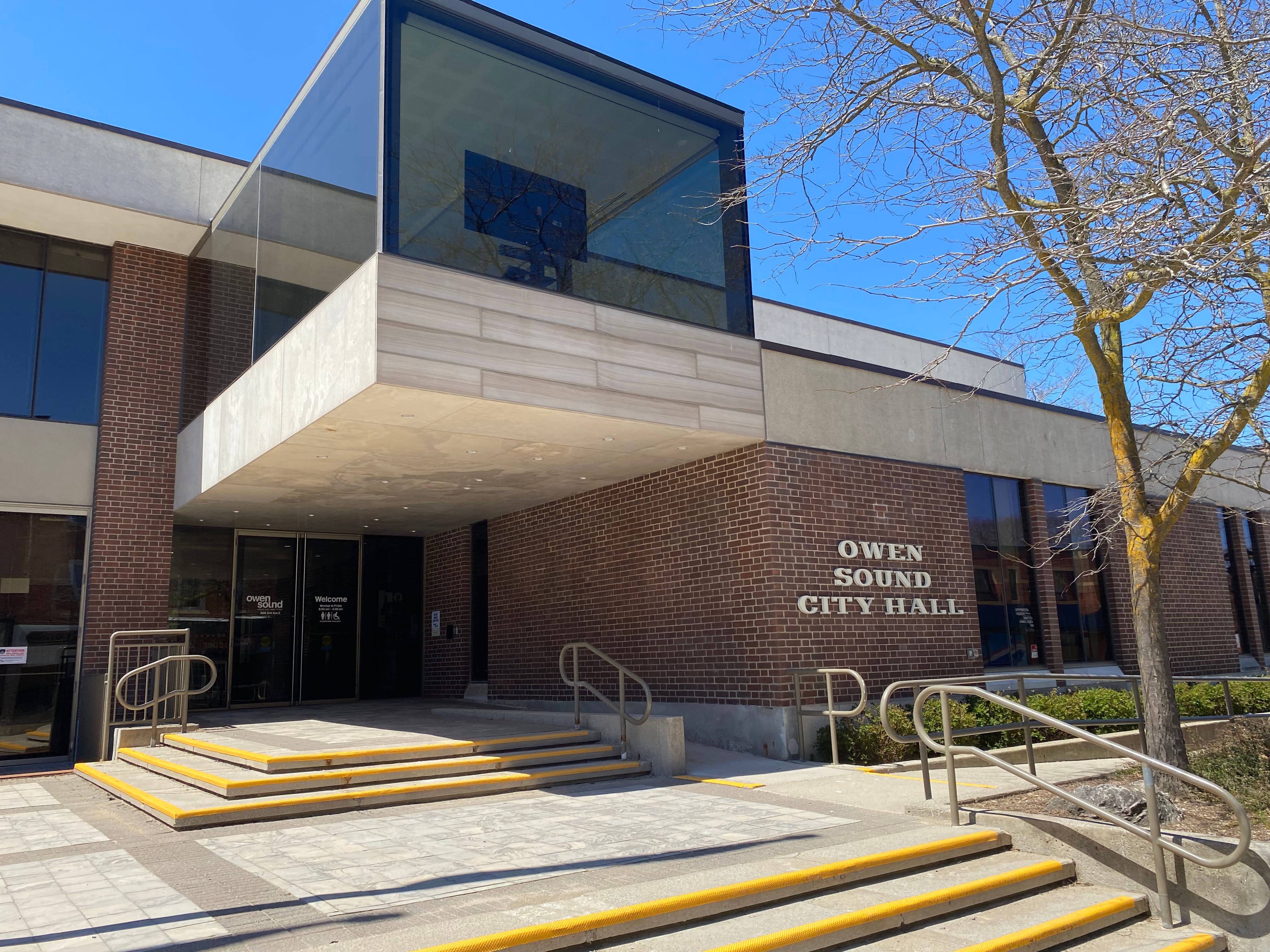
Owen Sound's Statement on 2024 Financial Indicators: Improvements and Omissions
Owen Sound touts "strong progress" in 2024 financial indicators, but a closer look at the information in context reveals mixed trends and rising tax pressures. Here's what the data really shows.
Five days after approving a $53.4 million operating budget for 2026 — the first under Ontario’s Strong Mayor system — the City of Owen Sound issued a statement titled “Provincial Financial Review Shows Strong Progress for Owen Sound,” celebrating improvements to its 2024 financial indicators.
The City’s statement highlights what it described as “significant improvements” in its municipal finances, citing the Province of Ontario’s annual Financial Indicator Review.
However, the indicators are standardized financial ratios used across Ontario municipalities to assess sustainability, flexibility, and vulnerability. The Ministry of Municipal Affairs and Housing states that they are intended for informational purposes only and do not represent an evaluation or opinion of a municipality’s overall financial health.
The provincial documents, released by the Ministry of Municipal Affairs and Housing and dated December 15, 2025, are based on the City’s audited 2024 Financial Information Return.
A review of the province’s summary and Owen Sound’s statement on what it means shows that while several indicators improved in 2024, others remained flat or worsened. Some of the City's messaging omits these changes or relies on past-year data that doesn’t reflect current fiscal conditions.
Property Tax Affordability
Residential property taxes consumed 5.9% of median household income in 2024, down from 6.9% in 2023. The City called this a sign of “meaningful progress,” noting that “property taxes now consume a smaller share of what typical households earn than in recent years.”
However, the same affordability indicator was 5.8% in 2020 — 0.1% lower than in 2024 — showing that while the 2023-to-2024 decrease is real, it does not represent a consistent multi-year decline or smaller share of what households earned “in recent years.”
Debt Servicing Costs
Under the heading “Debt Management Milestone Reached,” the City stated that debt servicing costs fell to 4.0% of total revenues in 2024, “the first time in over a decade that Owen Sound has moved out of the Province’s moderate-risk range into low risk.”
Provincial data confirms the decline from 5.9% in 2023 to 4.0% in 2024 — the first time in over a decade the City has met the Ministry’s “low-risk” threshold of 5% or less.
However, the Ministry does not describe crossing risk thresholds as milestones, achievements, or endorsements. The classifications are statistical bands based on fixed ratios.
The City’s statement that this “signals that the City is successfully managing its debt burden” interprets a data point as a performance validation that the Province does not provide.
Reserves and Financial Position
Under the heading “Stronger Financial Position,” the City stated that reserves have grown to $42.8 million, placing Owen Sound in the Province’s low-risk category alongside similar municipalities across Ontario.”
The statement added that “net debt as a share of revenues has also improved steadily, reflecting a healthier balance sheet.”
The provincial data confirms that total reserves and discretionary reserve funds grew in 2024, representing 70.1% of municipal expenses, a ratio classified as low risk.
However, the City’s subjective characterization of a “healthier balance sheet” omits a key detail: net financial assets remained negative, at –20.8% of own-source revenues, meaning the City’s liabilities still exceeded its financial assets by $12.4 million.
While that is an improvement from 2023 (–36.1%), it signals continued long-term fiscal constraints — the City still carries net debt, not net assets.
In the City’s 2026 budget documents, salaries and benefits increased 5.4% in 2025, and total City expenses rose by over 12%. These trends suggest ongoing pressures that are not captured in the 2024 indicators.
Indicators Not Highlighted
The City’s release did not mention changes in taxes receivable. Provincial data shows that taxes receivable rose to 7.3% of total taxes levied in 2024 — up from 5.9% in 2023.
That means a larger share of billed taxes went unpaid, despite the indicator remaining within the low-risk classification. The increase represents approximately $900,000 more in unpaid taxes compared to the previous year.
Also not referenced was the asset consumption ratio, which rose from 39.2% to 40.4%, indicating further aging of municipal infrastructure.
Though still classified as low risk, this trend points to a gradual increase in the use of asset life and a potential need for future reinvestment. The ratio indicates that over 40% of the City’s infrastructure has been consumed through wear and age.
The City’s statement claimed “all of Owen Sound’s sustainability and flexibility indicators are now rated low risk by the Province”—a statement that is technically accurate but omits that some low-risk indicators worsened in 2024.
Context and Timing
The provincial review reflects 2024 fiscal data, but was published less than a week after the City adopted its 2026 budget, which includes:
A 5.2% increase in the tax levy
A 4.72% residential tax increase
Ongoing pressure from staffing, inflation, and infrastructure costs
None of these budget changes are reflected in the indicators highlighted by the City’s media release, which uses prior-year data.
What Else the Numbers Don’t Show
The provincial indicators offer financial ratios but provide limited context about the economic conditions facing Owen Sound residents.
The 2024 median household income of $63,200 is well below the provincial average, but neither the provincial documents nor the City’s statement indicates whether local incomes have grown, shrunk, or remained flat in recent years. That information is essential to understanding whether the improved tax-to-income ratio reflects rising household earnings or other factors.
Similarly, while property taxes consumed 5.9% of median household income in 2024, the data doesn’t account for other cost-of-living pressures — housing, food, utilities — that determine whether residents actually feel relief.
Retrospective Data and Forward-Looking Claims
“While challenges remain, particularly around affordability pressures, the trajectory is clear: disciplined financial management is strengthening the community’s fiscal foundation and enabling the City to plan responsibly for the future,” the City’s statement concludes.
However, trajectories require consistent direction. The 2024 data shows mixed results, with some indicators improving and others worsening. A single year’s retrospective data, released days after budget approval, does not establish a future trajectory—particularly when that budget includes a 5.2% levy increase and addresses pressures not reflected in the 2024 review.
The provincial review offers a snapshot of the City’s finances at a single point in time. It does not reflect the rising staff costs, arbitration-related legal expenses, and departmental pressures detailed in the City’s 2025 and 2026 budgets — where salary and benefit costs accounted for over 65% of expenses and continued to climb.
The Ministry itself acknowledges these limitations, noting that its Financial Indicator Review is intended to “support analysis and discussion” and should be reviewed in the context of other financial information, including current budgets, multi-year plans, and known local conditions.
The City’s statement, however, did not provide this broader economic context, leaving residents to assess claims of “strong progress” without information about local income trends, employment conditions, or how Owen Sound’s fiscal situation translates into household-level impact.
Financial health and progress isn’t just about ratios; it’s about people’s lived economic reality.
Copies of the full Financial Indicator Review and Municipal Financial Profile are available through the Ministry of Municipal Affairs and Housing.
Related:


