

Owen Sound to Wiarton Transit Route to Return in 2026, No New Local Funding Needed
The revived Owen Sound to Wiarton route needs no new county money, running on existing budget and provincial funds while a regional network is designed.

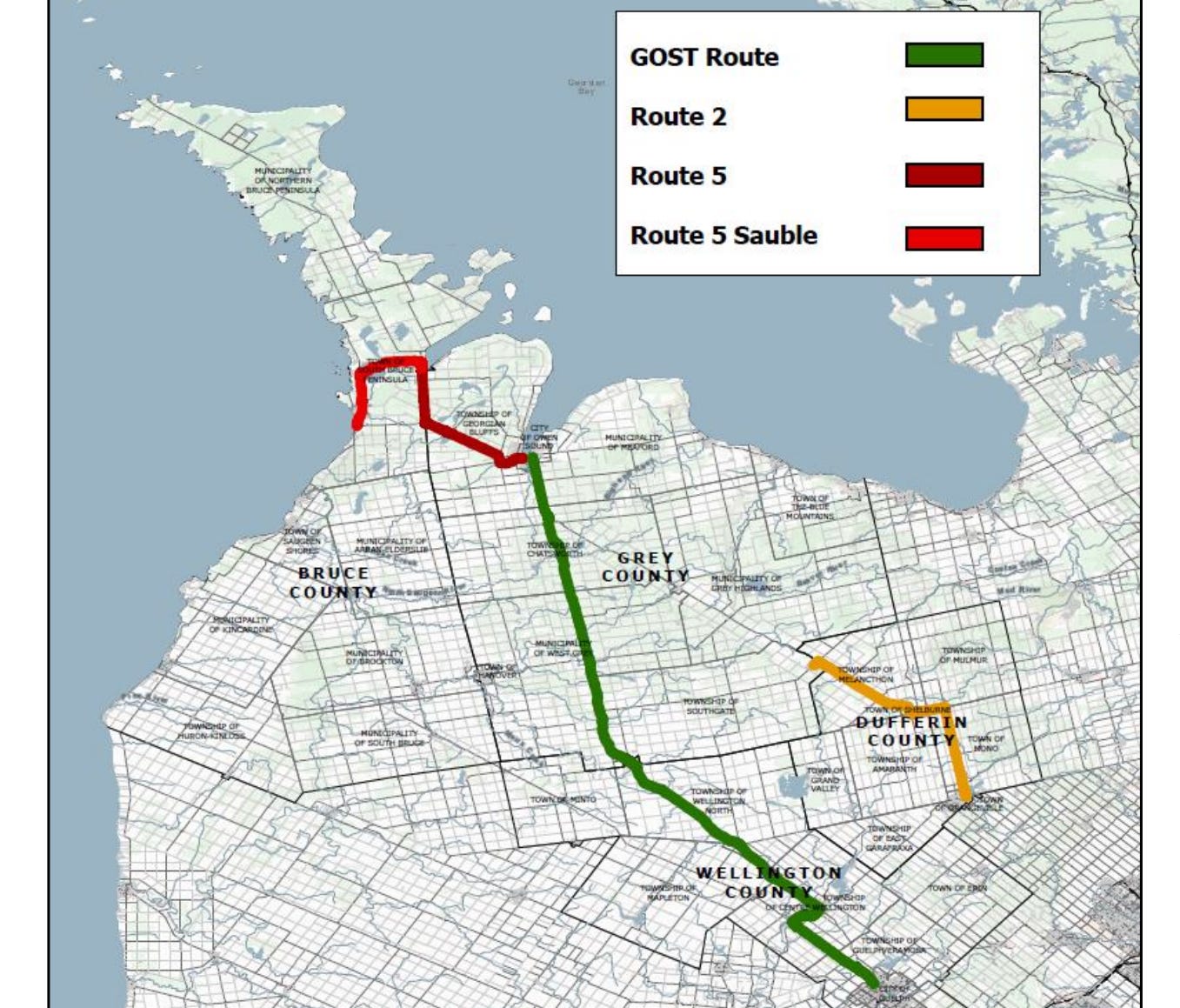
Bruce County Council has endorsed reintroducing bus service between Owen Sound and Wiarton, reviving a previously popular route, as an interim step while a four-county study works toward a permanent regional transit network.
At its July 16 meeting, council backed the return of Grey Transit Route 5 from Owen Sound to Wiarton as part of a “pre-approval phase” recommended by the team behind the Bruce-Dufferin-Grey-Wellington Regional Transit Study (report TES-2026-017). The route is to return in 2026 and run until the partners settle on a unified regional network.
The reintroduction requires no new Bruce County money. Staff reported the service can be covered within the county’s already-approved 2026 budget, drawing on a previously approved $145,000 transit levy, with support from the provincial Ontario Transit Investment Fund (OTIF). The province confirmed on June 30 that OTIF money can be used during the pre-approval phase.
Two other routes operating through the study period — Grey Transit Route 2, extended from Dundalk to Orangeville, and the Guelph Owen Sound Transit (GOST) service — will continue under the same plan. A seasonal extension of Route 5 to Sauble Beach, to cover peak tourism season, will be considered through the 2027 budget process.
The Owen Sound to Wiarton route is one piece of the Bruce-Dufferin-Grey-Wellington study, which staff describe as the largest regional transit study of its kind in Ontario.
Working with Dillon Consulting, the project partners — Bruce, Dufferin, Grey and Wellington counties, along with Saugeen Mobility and Regional Transit (SMART) — are designing a possible Unified Regional Transit Network.
Staff recommended using the summer to gather more information, including a request for information on technology and operator interest, and further work with the Ministry of Transportation on provincial funding rules, before returning to council this fall with a draft plan. Final recommendations would go to the incoming councils and the SMART board in 2027.
Councillors supported the interim route but flagged its dependence on continued provincial funding. One member noted the route had run successfully before and lapsed for funding reasons; another said its feasibility would shift sharply if provincial support changed.
In a delegation to council the same morning, the Western Ontario Wardens’ Caucus underscored the funding gap facing rural transit, citing Huron County figures that put per-resident transit funding at roughly $191 in the Greater Toronto Area against about $13 in the Bruce, Stratford and Huron area.
Related:


