
Owen Sound Council Passes 5.2% City Budget Increase for 2026
While the City levy rose 5.2%, Owen Sound residents will see a 4.72% property tax hike in 2026 with County and education levies factored in. Here’s what that means for households and services.

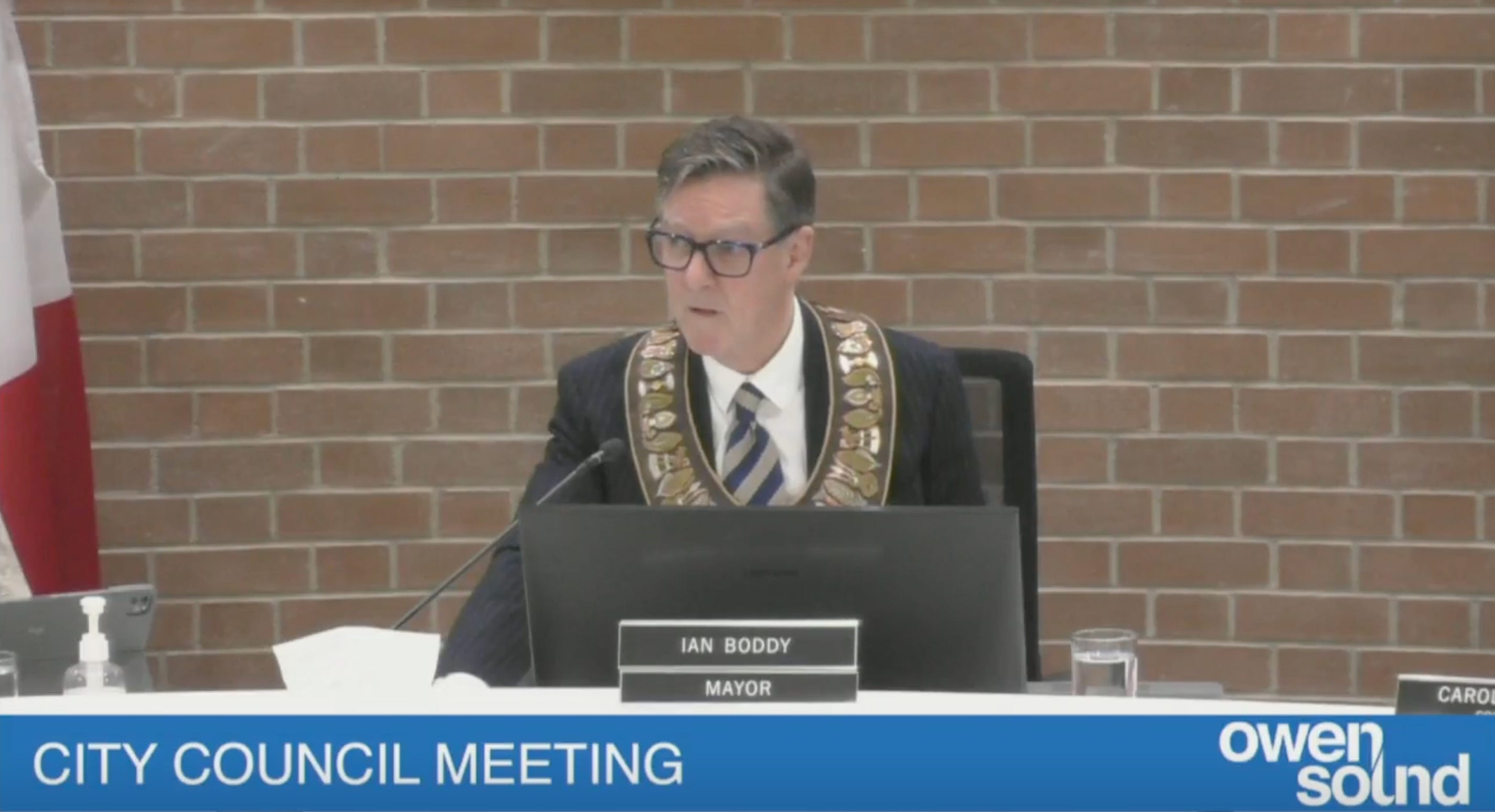
Owen Sound residents will see a 4.72% increase on their property tax bills in 2026 after City Council allowed the proposed Mayor’s Budget to pass without amendments on January 16.
The City’s 2026 operating budget includes a total tax levy of $39 million, representing a 5.2% increase over 2025. After the County and education levies are factored in, the actual residential tax rate increase is 4.72%.
For the average residential property assessed at $230,000, the total 2026 tax bill will be approximately $4,747, up $214 from last year.
The budget tabled by Mayor Ian Boddy just before the holiday break was deemed adopted under Ontario’s Strong Mayor legislation, marking the first full budget cycle under the new provincial framework.
In his budget presentation, Boddy states, “This proposed budget reflects my commitment to keeping taxes as low as possible while addressing the growing financial pressures of delivering a strong, safe, and sustainable City.”
However, as the City noted in its official budget confirmation announcement:
“Despite several development projects breaking ground in 2025, the City did not experience growth in its taxpayer base during the 2026 fiscal year.”
Ultimately, they said, the final budget is a “collaborative compromise” for the residents of Owen Sound.
What Changed Under Strong Mayor Powers
The 2026 budget was the first to be passed under the Province of Ontario’s Strong Mayor powers, which came into effect in Owen Sound in 2025.
These powers significantly change how municipal budgets are created and approved in certain municipalities, shifting more responsibility to the mayor rather than council as a whole.
Related:
Under the new rules, the mayor is required to table the draft budget, rather than staff or council. Council then has a limited window—30 days—to propose and pass amendments. If no amendments are approved by the deadline, the mayor’s proposed budget is automatically deemed adopted.
In Owen Sound, Mayor Ian Boddy tabled the budget on December 22, 2025. Two proposed amendments were defeated during Friday’s meeting.
The first, tabled by Councilor Carol Merton, would have increased the city’s police levy from the Mayor’s proposed 5.5% to 7.23%. That was the revised figure approved by the Owen Sound Police Services Board following months of financial review.
Related:
Owen Sound Police Budget Faces Shortfall for 2026 as Council Rejects Full Funding Request
The Owen Sound Police Service is heading into 2026 with less funding than it says is necessary to maintain core operations, after an amendment to restore the service’s full budget request was voted down during final deliberations on Friday.
A second amendment proposed by Jon Farmer asked that the city begin setting aside 2% annually, rather than 1%, of the dedicated capital levy. That was also defeated, and the 2026 budget was adopted without changes.
While some other Ontario municipalities chose to hold public budget meetings under the new framework, Owen Sound did not host a public forum this year. Instead, information was gathered through committee-level discussions and one-on-one consultations between the Mayor, City staff, and members of Council.
2026 Owen Sound Budget Insights
By the Numbers
Total operating: $53.4M
Capital levy: $2.9M
Debt payments: $1.6M
Staff share of base budget increase: 82%
Building permit revenue: $600K
While the City held the overall budget increase to 5.5%, the 2026 Tally Sheet reveals some sharp swings within individual departments. Overall, staff costs represent 82% of the city’s base budget increase.
Parks and Open Spaces saw an increase of $194,101 (9.5%), driven by a new staffing model that added hybrid full-time roles while reducing seasonal positions.
Meanwhile, some divisions saw significant reductions. The Building and Plumbing Inspection budget was cut by more than half, down $94,000, as external contracts were phased out. Facility bookings and tourism also saw reductions, suggesting a shift in focus or demand.
Across the board, wage inflation, reserve contributions, and software licensing drove modest increases in core administration areas like Finance, IT, and HR.
Notably, police and fire budgets increased, but staffing levels remained unchanged. Those increases were attributed entirely to wages, benefits, and inflationary costs. And while some new reserve contributions were introduced, the City also eliminated a $417,000 debt payment, reducing pressure on the levy.
The following is a breakdown of how the City’s tax-funded operations will be funded in 2026—and how that impacts the residents who pay for them.
City Manager’s Office
In the 2026 budget, the “City Manager, Strategic Initiatives and Communications” division has a net levy requirement of $638,745. This is the amount paid by taxpayers after internal cost allocations are applied.
That figure is up $51,850 from 2025, an increase of about 8.8%.
The division includes four full‑time equivalent positions. There is no indication in the budget documents that additional staff were added in 2026.
The increase is driven primarily by wage and benefit increases, a $10,000 reserve contribution for strategic planning, and changes to how costs are allocated internally between departments.
City Clerk’s Office
The City Clerk’s division has a 2026 net levy requirement of $579,091, an increase of $74,392, or 14.7%, compared to 2025.
The division includes six full-time positions, covering legislative services, records management, council coordination, and elections. The increase in 2026 is largely attributed to staffing costs related to the municipal election, step increases, and the City’s standard 3% wage adjustment.
While a $60,000 transfer from reserves was included to help offset election costs, the levy still rose significantly. There is no indication of a change in staffing levels.
Corporate Services – Director’s Office
The Director of Corporate Services division has a 2026 net levy requirement of $146,724, up $6,450 from 2025 — an increase of 4.6%.
This office includes the Director of Corporate Services, whose responsibilities span finance, human resources, information technology, and corporate assets. The budget shows only modest changes, reflecting standard wage increases and no change to staffing.
Finance and Accounting
The Accounting division within Corporate Services has a 2026 levy requirement of $483,316, an increase of $127,433, or 35.8%, compared to the previous year.
The division includes five full-time staff, including the Deputy Treasurer and support positions. The increase is primarily due to wage adjustments and the end of temporary “gapping” — a budgeting practice that reduces actual costs by filling vacancies.
A new $70,000 reserve contribution for future financial system improvements is also included in 2026. There is no indication that new staff were added.
Human Resources
The Human Resources division has a 2026 levy requirement of $551,064, up $23,699 from 2025 — a 4.5% increase.
The HR division includes three full-time positions and oversees all employee relations, recruitment, collective bargaining, and internal investigations. The increase reflects negotiated wage increases and ongoing demand for third-party services related to arbitration and legal matters.
Staffing levels remain unchanged.
WSIB / Health & Safety
The WSIB and Employee Safety division has a 2026 levy requirement of $149,920, down $21,434 from the previous year.
This budget supports a full-time HR specialist focused on workplace safety, equity, and wellness. The reduced levy reflects a $30,000 anticipated rebate from the WSIB Excellence Program. Operating costs remain steady, and no staffing changes are indicated.
Information Technology
The IT division has a 2026 net levy requirement of $661,492, an increase of $99,747, or 17.7%, from 2025.
The division includes four full-time staff and one part-time position. Much of the increase is tied to rising software licensing and maintenance fees, including a new project management system and upgrades to the City’s budgeting tools. A $175,000 reserve contribution is also included in the 2026 capital funding plan.
There are no changes to staffing levels in 2026.
Purchasing, Risk & Asset Management
The Purchasing and Asset Management division has a 2026 levy requirement of $53,803, down $56,705, or 51.3%, compared to 2025.
The division includes three staff and is responsible for procurement, risk oversight, and asset tracking. The reduced levy reflects an internal reallocation of staff time to other departments where they provide direct support, such as facility management.
There is no indication of changes to overall staff count, but some salaries are now charged to other divisions.
Tax Office (Revenue – Tax and Water Billing)
The tax and water billing division has a 2026 levy requirement of $54,171, up $2,251, or 4.3%, from 2025.
The division includes two full-time staff and oversees all billing, collections, and administrative support related to municipal taxes and water rates. The increase is minimal and reflects standard wage adjustments and postage costs. Water billing services are funded through user rates and do not affect the levy.
Staffing levels remain unchanged.
Service Owen Sound (Customer Service and Treasury Support)
Service Owen Sound has a 2026 levy requirement of $45,831, an increase of $1,859, or 4.2%, over 2025.
This division includes one full-time and one part-time employee responsible for front-desk customer service and administrative support across departments. The budget is stable, with most of the increase coming from wage adjustments.
Some of the division’s costs are allocated to other areas like parking and water, and there are no changes to staffing levels.
Mayor and Council
The combined cost of Mayor and Council in 2026 is $369,201, up $10,583 from 2025 — a 3% increase.
The budget includes salaries and benefits for all nine elected members, along with professional development, meeting expenses, and limited office supplies. The increase reflects standard indexing in line with other City staff.
Council’s size and composition remain unchanged.
A New Process, Familiar Pressures
The 2026 budget cycle marked a procedural and political shift for Owen Sound, with the Strong Mayor framework placing greater authority in the hands of the Mayor, while still allowing Council to debate and propose amendments.
Although no changes were ultimately made, the discussions highlighted ongoing pressures, particularly in areas like policing, capital funding, and administrative costs.
As municipal services continue to evolve and staffing costs rise across departments, Owen Sound residents can expect further conversations about how best to balance affordability with long-term investment.
With a 4.72% property tax increase now finalized for 2026, the impact will be felt gradually, at roughly $18 per month for the average household.
Related:


