
Owen Sound Council Opposes Province’s Plan to Overhaul Conservation Authorities
Owen Sound Council has formally rejected Ontario’s plan to merge conservation authorities, warning of higher costs, weaker local oversight, and risks to development timelines.

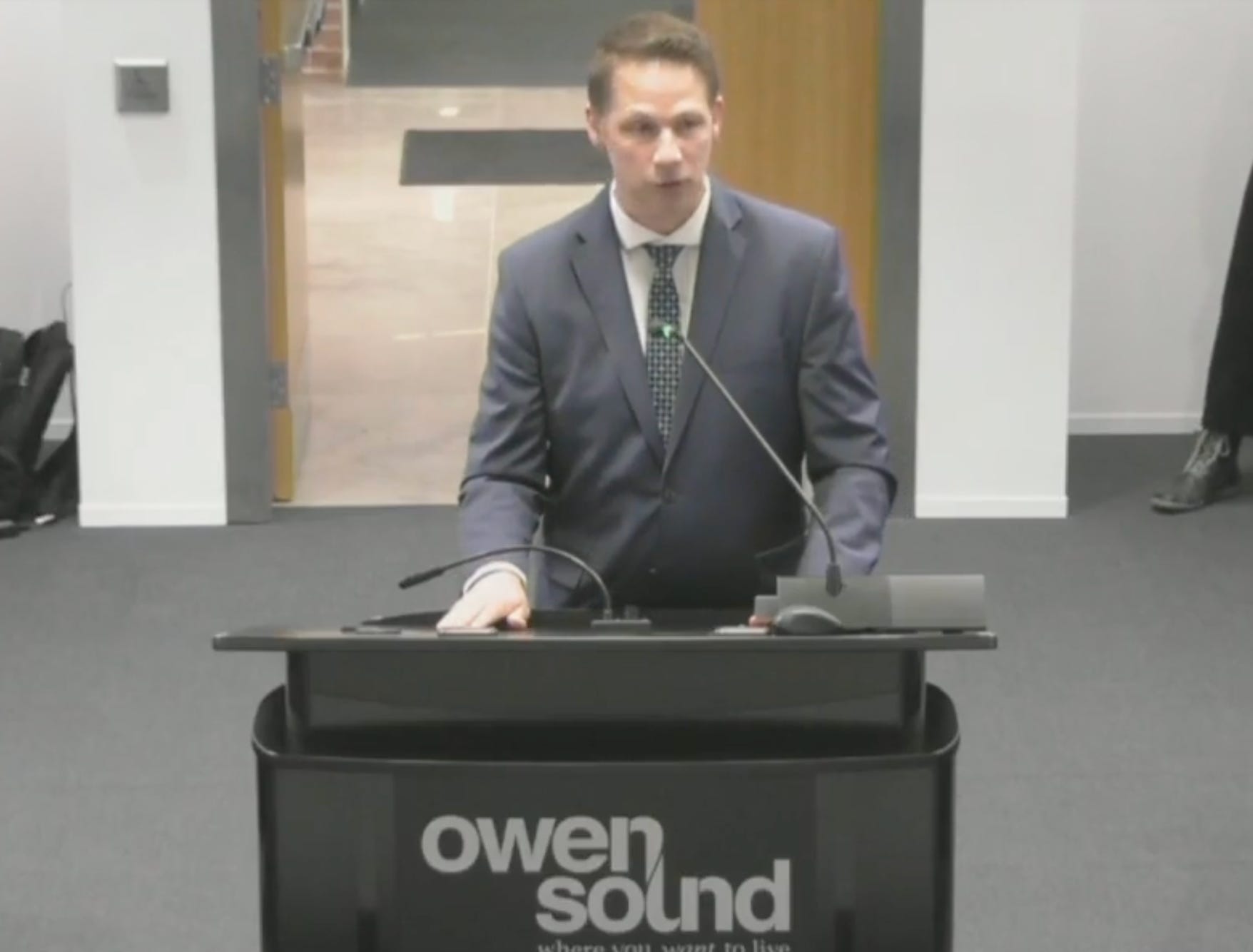
In a special meeting held on Monday, December 15, Owen Sound City Council unanimously opposed a sweeping overhaul of Ontario’s conservation authority system, warning that the province’s plan could erode local representation, increase municipal costs, and disrupt long-standing partnerships that protect people, property, and ecosystems across the region.
The province’s plan, introduced through Bill 68 (Plan to Protect Ontario Act) and already passed into law in late November, creates a new Ontario Provincial Conservation Agency and sets the stage for merging Ontario’s 36 existing conservation authorities into seven regional “super-authorities.”
Under the proposed boundaries, the Grey Sauble Conservation Authority (GSCA)—which currently serves Owen Sound and seven other municipalities—would be consolidated into a vast new Huron-Superior Regional Conservation Authority, encompassing an estimated 80 municipalities and 23,500 square kilometres of territory from Grand Bend to Thunder Bay.
What Does Ontario's Move to Merge Conservation Authorities Mean for Owen Sound & Grey-Bruce?
Ontario’s network of 36 conservation authorities is set for a major restructuring under a provincial proposal to consolidate them into …
Owen Sound, once one of eight partners helping to direct GSCA, would become just one of 80. It’s a shift that City staff and councillors say will diminish the City’s voice in decisions that directly impact the community and local environment.
Council Unanimously Rejects Restructuring Plan
Council’s concerns were laid out in detail in a comprehensive staff report (CS-25-123) presented by Manager of Planning & Heritage Sabine Robart, standing in for Senior Planner Margaret Potter.
The report highlighted what staff described as a lack of transparency, accountability, and consultation in the province’s process, as well as the absence of any cost-benefit analysis.
Council’s resolution directs staff to send the report and formal opposition to the Province of Ontario, local MPP Paul Vickers, Premier Doug Ford, and key provincial ministries, including Environment, Natural Resources, and Municipal Affairs.
It will also be circulated to the member municipalities of GSCA, to encourage broader regional response ahead of the province’s Environmental Registry comment deadline on December 22, 2025.
“This is a very thorough report about a very bad idea,” said Councillor Jon Farmer during the meeting. “There are so many reasons this is concerning, not least of which is that we don’t even know how much it’s going to cost.”
What’s Changing, and Why It Matters
The proposed regionalization is part of the Ford government’s stated push to “standardize” and “modernize” conservation authority operations across Ontario. The government argues that current authorities operate with varying policies, standards, and fees, which it says slows development and creates uncertainty.
But City staff and conservation experts counter that these differences reflect the unique geography and hazards in each watershed, and that many of the standardizations the province seeks have already been implemented through new regulations passed in 2024. They argue that restructuring the entire system at this point is premature—and unnecessary.
“Different watersheds need different solutions,” said Robart. “This move strips away local flexibility and puts critical environmental decisions further from the communities they affect.”
Conservation authorities in Ontario are responsible for a range of essential programs, including flood forecasting and warning, land use planning and permitting, hazard mapping, conservation land management, and drinking water source protection. Many of these responsibilities are shared with municipalities, particularly in flood-prone areas like Owen Sound.
GSCA currently manages over 29,000 acres of land, 172 kilometres of trails, and multiple conservation areas within and adjacent to Owen Sound, including the popular Inglis Falls and West Rocks areas.
It is governed by a board made up of municipal representatives. Owen Sound currently appoints two of the eleven board members.
Owen Sound’s local zoning by-laws, planning application reviews, and flood hazard mapping all rely on close collaboration with GSCA staff. A change in governance, staff warned, could mean slower permit reviews, higher costs, and more bureaucratic complexity at a time when the City is seeing record levels of residential growth.
Local Funding, Local Accountability
Another central concern raised at Monday’s meeting is funding. GSCA’s 2026 draft operating budget is just over $4.2 million, with 44% funded by local municipalities and just 7% from the Province of Ontario. Nearly half the budget is self-generated through user fees, grants, and services like parking at conservation areas.
Speaking to Council, GSCA Chief Administrative Officer Tim Lanthier warned that the restructuring could jeopardize the reinvestment of local revenues into local properties.
For example, GSCA is expecting to raise $400,000 this year from parking fees at sites like Inglis Falls—money currently used to maintain those properties. Under a regional model, that funding could be redirected elsewhere.
“We’ve been very fortunate — we have a lot of beautiful properties that we take care of and we do charge parking fees at some of those properties. This year, that’s going to drive about $400,000 in revenue,” Lanthier explained. “We reinvest that money back into these properties locally and back into these programs locally. If that’s funnelled up to a regional jurisdiction, we have no guarantees that that money ever comes back to the community.”
He added that everything he’s seen so far suggests the new process would cost more, not less.
“The reason I say that is that we’re adding extra levels of bureaucracy. We have the province saying that no staff, no jobs will be lost by this. So your opportunity with an amalgamation to save money through that type of cut is not going to exist,” Lanthier said.
“You’re now also paying for a regional governance body. I expect the regional office to pay their senior staff more because their responsibility is more … and I also expect levelling up of staff across the entire region because that’s what we’ve seen happen in other amalgamations,” he added.
Lanthier also expressed concern about a proposed new provincial online permitting portal, noting that similar systems have led to delays elsewhere and are not accessible for all rural residents.
Broader Impact and Next Steps
The province is currently seeking feedback on Environmental Registry of Ontario (ERO) Posting 025-1257, which outlines the proposed boundary changes. Owen Sound’s submission will now become part of the formal public record.
But with the legislation already passed and little information provided about how regional boards would be governed, funded, or structured, many local leaders say it’s unclear how—or whether—the province will respond to the growing municipal opposition.
To date, GSCA has presented to nearly every member municipality it serves. According to Lanthier, “the sentiment from all of the councils has been that this does not seem like a good idea for rural Ontario.”
Council also expressed concern about the potential loss of Indigenous consultation mechanisms embedded in current local processes. Several councillors emphasized the need for meaningful engagement with Indigenous communities before any structural changes are made.
Staff and councillors both urged members of the public, especially those concerned with conservation, development, and municipal funding, to submit their own feedback before the December 22 deadline.
How to Submit Feedback
Members of the public can submit comments to the Ontario government regarding the proposed regional consolidation of conservation authorities via the Environmental Registry of Ontario (ERO Posting 025-1257), available at: www.ero.ontario.ca
Related:


