
Our Town: How Owen Sound's Retail Moved From Downtown to Big Boxes Uptown
In this fourth column in his limited series 'Our Town,' David McLeish charts the shift of Owen Sound's retail from downtown to the big-box east side.
OUR TOWN | OPINION
Our Town is a limited series of columns by Owen Sound resident David McLeish. This column reflects the analysis and evidence-based opinions of the author and is part of an ongoing opinion series. It is not news reporting.
In addition to its position as a manufacturing centre, Owen Sound was also characterized as a thriving retail hub. Vernon’s Owen Sound Directories are a tremendous source of information on downtown businesses. They list the various retail outlets by type (e.g. harness makers, barbers, ladieswear) over the years, permitting an assessment of their number and duration.
Unfortunately, the Directories are not available for every year. Also, since some of the information in the publication was contingent upon paid advertising, a business might opt out in some years, necessitating additional research to determine if they were still open or if they had closed.
As such, the resultant data should be considered a sample or an index that can be used to track changes in a variable over time rather than an accurate or complete inventory. The sample size is the best I could compile and it provides insights, not the entire puzzle.
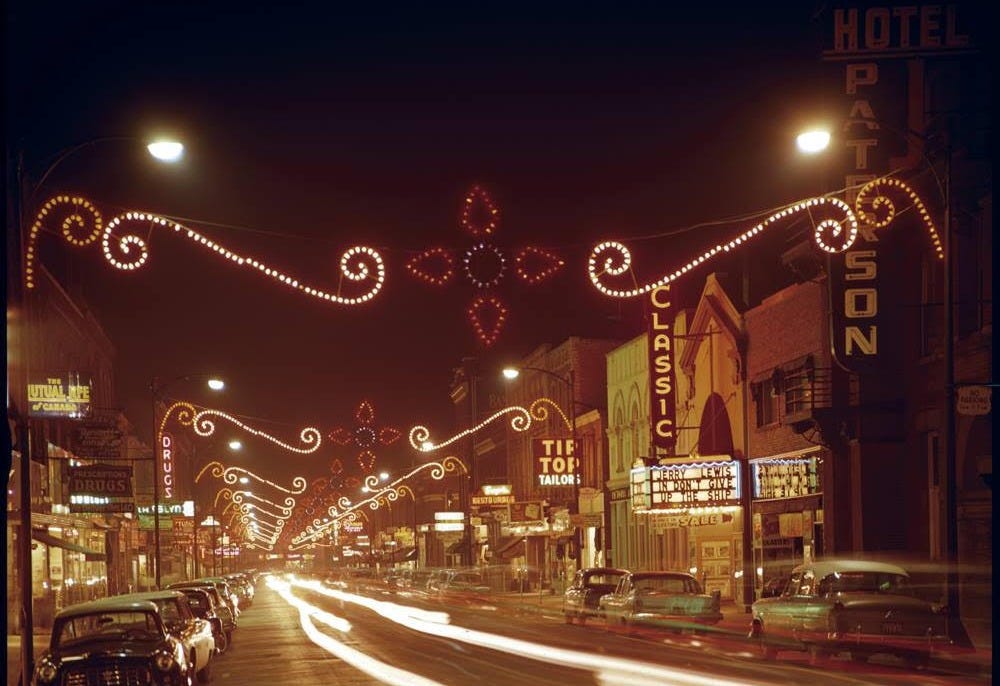
Retail businesses were the mainstay on 2nd Avenue East from the town’s inception until rather recently. In 1912, the Owen Sound Collegiate Institute (O.S.C.I.) Auditorium yearbook featured advertisements for local stores including:
McQuaker & Co. (Blends of Teas and Coffees)
T. I. Thomson & Co. (Headquarters for Hockey Outfits)
Oak Hall (The Store For Better Clothes)
McKay Bros. (New Prints, Waistings, Ginghams, and Muslins)
and Lemon Bros. (Wholesale Produce, Fruit).
According to the 1912 and 1920 issues of the O.S.C.I. Auditorium and Vernon’s Owen Sound Directories from 1928, 1938, 1942, 1958, 1964, 1968, 1974, 1979, 1985, 1987, 1991, and 2003 some long-lived businesses were:
Bill Gardhouse (1938 to 2003)
Douglas Men’s & Boys Wear (1920 to 1968)
Gorbet Ladies’ Wear (1928 to 1987)
Grace Dress Salon (1958 to 2003)
Grafton & Co. Ltd. (1912 to 1987)
Jim Boddy Men’s Fashion Shop (1958 to 1991)
Kilbourn (Misses, Millinery & Accessories, Ladies Wear, Boutique) (1938 to 1991)
Legate’s Fine Furniture (1914 to 2015)
McKay Brothers Ltd. (1912 to 1989)
Owen’s Mens’ and Boys’ Wear (1964 to 1987)
Reitmans Ltd. (1958 to Present)
Royal Ladies Wear (1938 to 2003)
The Towne Shoppe (1958 to 1985)
Wrays Ladies Wear (1938 to 2003)
Sadly, with the exception of Reitmans, which is now on the upper east side, none of these downtown mainstays remain today.
Several long-standing restaurants also characterized downtown Owen Sound. Appearing first as the Olympia Candy Kitchen in 1928, The Olympia Restaurant continued through to a listing in the 1979 issue of Vernon’s. Similarly, Scopis Restaurant is listed in the 1938 issue of Vernon’s, continuing until the 1991 issue. Another favourite, The Trio, first seen in the 1964 edition of Vernon’s, lasted until about 1996 or 1997.
Today, many of the original family-owned businesses and restaurants have disappeared, but Owen Sound’s downtown is far from forsaken. One can still visit longstanding establishments such as Europa for delicious food in the setting of a diner from bygone years. Downtown is in transition, but mainstays such as Bergeron Automotive, Williamson Automotive, Greyfair Furniture and Carpet, Wardell’s Carpet and More, The Ginger Press, Fulfords, Becker (formerly Ron Oatt’s) Shoes, The Rocking Horse, Lawson’s, Pretty Woman’s Shoes & Swirls (formerly Dr. Cobbler), Coates and Best Office Supplies, Phoenix Bookstore, Channings, Foto Source, and McArthur Tire have been here for decades.
Relatively new additions such as The Bavarian Hut, Home Decor and More, The Frog Pond, Boon Bakery, Sweetpea (Mother, Baby, Child), Wild Flowers, Curio, Sugar Dust, Grey Gallery, Sunpoint, Barebirch, Riverside Yarns, Heartwood, Sabitri’s, The Milk Maid, Shanny’s Kitchen, Dollhouse, Dutch Ink, The Curry House, etc. also add to the downtown experience.
Operating a small business can be a major challenge in the best of times, and even though entrepreneurs try to anticipate factors affecting sales, it is not always possible to manage every change.
Pressure on downtown began some 60 years ago with development in Keppel Township (now Georgian Bluffs). The first was the Towers/Food City complex that opened on June 11, 1968, followed by the Grey County Mall, which opened on May 17, 1972. Concurrent with these developments, the City saw its first McDonald’s and Burger King and the relocation of the downtown Canadian Tire to Keppel Township to the west of Owen Sound. Despite these developments, the downtown continued to thrive.
The next wave of change occurred 15 years later and arguably placed considerable pressure on many downtown businesses. On October 20, 1987, Heritage Place Shopping Centre opened on the east side. With some 35 businesses, large Sears and Zellers stores, 1,420 parking spots, a food court, and a proximal Kelseys and Pizza Hut, it soon became a destination. This was clearly a turning point for the downtown.
Heritage Place Shopping Centre was followed almost overnight by the sprouting of the “big box” stores, particularly on the east side, but also in Keppel Township to the west of the City. This included: the conversion of the Woolco in the Grey County Mall in Keppel Township to a Walmart in 1994 or 1995; a ‘new’ Canadian Tire on the east side in 1995 and the subsequent conversion of its former location to a Staples; the relocation of Walmart from Georgian Bluffs to an even bigger location on the east side in 1999; the arrival of Home Depot pre-2003; the opening of Value Village, Winners Canada and Michaels Arts & Crafts in 2013, and Princess Auto in 2015.
The list continues to grow with the recent opening of a FreshCo and others currently under construction. In addition, several longstanding downtown businesses have recently been lost to the pandemic, retirement, and consolidation.
To a large extent, these changes are ‘normal’ and are happening everywhere. Just about every town and city in Ontario is now characterized by a strip of grocery, hardware, furniture, and dry-goods stores on the road into/out of town. Sadly, it seems that historic downtowns have been forsaken for large parking lots, restaurants, and fast-food drive-throughs.
As with their industrial counterparts, some retail stores lasted decades while others were more short-lived. For example, McKay Brothers Ltd. was in business from 1905 until 1989, whereas Oak Hall, a clothing store, appears to have survived only 8 years.
If one were to simply look at the number of businesses, they have certainly increased over time, but the spatial distribution is now much different. Starting in the 1970s, retail businesses established on the west side, and to a much larger extent, on the east side above the hill. The number of ladieswear stores, for instance, increased from a low of 7 in 1920 to a peak of 28 in 2003, with approximately 20 in operation today.
The following two charts compare the numbers of ladieswear stores and restaurants in Owen Sound relative to the proportion of these businesses situated downtown. As can be seen, prior to the expansion of the ‘uptown’ east side, 100% of the ladieswear and restaurants were downtown.
The proportion of ladieswear stores in the downtown began to decline after 1968, dropping by 20% over the next 19 years.
In the following 16 years, from 1987 to 2003, the loss was much steeper when a further 60% of the stores relocated out of the downtown or were replaced by new businesses. This decline is significant in that it occurred despite there now being more ladieswear shops since 2003 than in the period from 1928 to 1991.
Today, only about 15% of the stores offering women’s clothes are situated in the downtown.
As with most communities, retail evolved from small, family-owned specialized stores to larger chains, to “big-box” mass merchandising and more recently to multinational e-commerce, resulting in dramatic changes to consumer habits.
Today, one doesn’t even have to step outside their door to purchase just about anything and have it delivered the next day. (Except, perhaps, when that item doesn’t work and it has to be sent back or taken in for a small adjustment.)
In the case of restaurants, the situation was more complicated. An abundance of dairy bars and snack bars (e.g. 14 in 1968) makes changes in this sector a little more difficult to discern. For this analysis, only restaurants (i.e. offering abundant indoor seating and dining) are included.
Here, the percentage in the downtown declined from 100% in 1942 to 70% in the early 1960s. It then rose briefly to 86% in 1968, after which it has exhibited a remarkably steady decline.
Today, only 42% of the City’s restaurants are situated downtown. Indeed, there are now 2.5 times as many restaurants on the ‘uptown’ east side as the average number in the downtown from 1928 to 2003.
The sustainability of the recent massive expansion in the number of restaurants and fast-food outlets remains to be seen. As of 2023, there were reportedly 3,000 fewer independent restaurants in Canada compared to 2019 levels. Given that there are currently 7 times more restaurants in Owen Sound than the long-term average, one has to wonder how long many of these new additions will last.
Dr. Sylvain Charlebois, Professor at Dalhousie University in Halifax, has forecast that Canada could see a net loss of up to 4,000 restaurants as closures outpace openings in 2026.
Another change worth noting has been the disappearance of jewellery stores in the downtown. When we arrived in the area back in 1993, there were 3 (Buzza Brothers, Henrich’s Ltd Diamond Merchant And Credit Jeweller, and D.C. Taylor Jewellers), and one in the shopping centre. Later, a second D.C. Taylor Jewellers opened on 16th Street East.
The purchase of jewellery, a luxury or non-essential good, is widely considered a sign of disposable or discretionary income and is typically only purchased after basic needs are covered. If the number of jewellers can be considered an index of a community’s prosperity, Owen Sound’s peak was in the 1950s and 1960s.
Like so many North American municipalities, Owen Sound’s retail landscape has evolved to one characterized by a shopping centre, strip malls, and big-box stores, with the downtown retail comprised primarily of unique ‘one-off’ businesses.
Another characteristic of the current downtown is the presence of several charitable & non-profit arts organizations (GB Arts, The Roxy, The Georgian Bay Symphony, The Georgian Bay Folk Society, Harmony Centre, Intersections), arts related businesses (e.g. Artist’s Coop, The Ginger Press, Grey Gallery, Gallery De Boer-Fine Art & Jazz), and social service organizations (e.g. United Way Bruce Grey, OSHaRE, Safe ‘N Sound, Bruce Grey Child and Family Services, Community Living Owen Sound and District, REACH, Midwives Grey Bruce, YMCA of Owen Sound Grey Bruce - Employment Services).
A survey of the downtown in the fall of 2025, including both sides of 2nd and 3rd Avenues East from 8th Street E. to 10th Street E. and 8th and 9th Streets E. between these blocks, yielded 140 commercial storefronts. Of these, 95 were active businesses, 10 were occupied by social service agencies, and 45 were vacant, yielding an overall vacancy rate of 30%.
This figure contrasts sharply with the 8% reported by the J. C. Williams Group in their 2020 report “Retail Impact Study for Sydenham Heights Centre, Owen Sound,” which they “considered very healthy” and the 2024 figure of 9% reported by the River District Board of Management.
The count of 140 storefronts in my survey is notably less than half of the 350 stores and services referenced in the City’s Owen Sound Harbour & Downtown Urban Design / Master Plan Strategy (2000). Nonetheless, it does provide a recent reflection of what the average shopper sees.
A very brief survey of the available literature suggests that a 5% to 10% vacancy rate is “reasonable,” with a slightly higher rate acceptable in small towns where a short-term closure or renovation can inflate the numbers.
The number of social service agencies in the downtown would also seem to be high for a central business district. Owen Sound is not alone in seeing this trend, as this is often where the need for services is found.
Thank you to sponsors of The Owen Sound Current Writers’ Fund, who make these community contributions possible. Contributions from the community do not necessarily reflect the opinions or beliefs of The Owen Sound Current and its editor or publisher.
In this series:


