
Letter: Tradition, Spectacle & The Debate Over Wiarton Willie
A reader reflects on the Wiarton Willie tradition, questioning whether long-standing practices involving animals still align with evolving public expectations.

LETTER TO THE EDITOR
Dear Editor,
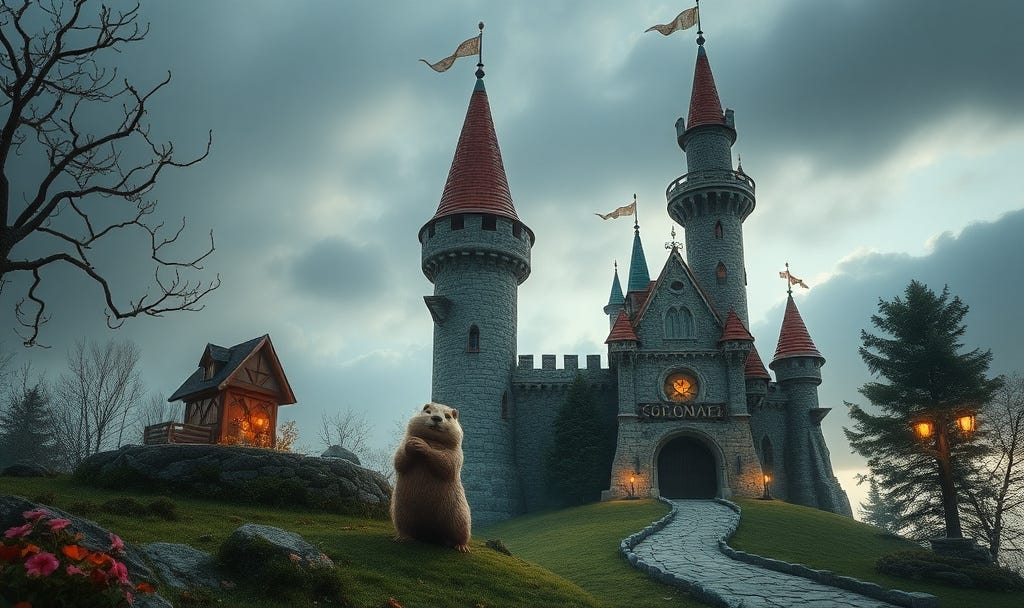
I’m writing in response to the letter from Dave Wood about Wiarton Willie. Dave, this was a great satirical piece. The image of a magical fairytale land where woodchucks chuck all the wood a woodchuck could possibly chuck... Who wouldn’t celebrate the life of an albino groundhog?
Complete with warm quarters, steady meals, and public admiration, it almost reads like a work of fiction, the premise for a children’s storybook, or another opportunity for folks to don costumes and groundhog regalia, and play make believe, not unlike Halloween, with a rodent engaged in prediction, pageantry, and prognostication.
For reference, I’m not coming at this from an animal rights advocacy lens. I hunt, I fish, and parts of my career and personal life have been grounded in animal husbandry.
I understand the realities of working with animals, and I don’t have much interest in debating organizations like PETA. Most people already have their own views on that.
To be fair, compared to the fate of many wild woodchucks, when they were plentiful and wreaking havoc in farmers’ fields, those that weren’t shot and hung on fence posts, or taken by predators, Willie likely did have a better life than most of his kind.
That said, this does not make the conditions ideal, nor does it make the use appropriate.
Whether sourced from the wild or bred in captivity, Wiarton Willie is still a wild animal being kept and handled in a human setting for the purpose of public spectacle.
The idea that this amounts to a kind of rodent “retirement resort” overlooks the realities of captivity, handling, and exposure to crowds, none of which reflect how a groundhog naturally lives.
It is also worth noting that wild animals kept in stable captive conditions often live longer than their counterparts in the wild. That hasn’t consistently been the case here, which raises reasonable questions about whether the “comfortable life” being described is as straightforward as it sounds.
The argument that Willie had a “good life” may be true in a narrow sense. However, that standard alone is no longer how we evaluate the use of animals. Good care does not automatically mean appropriate use.
We’ve seen this shift already...I won’t mention any names, but hows’bout them belugas!? The same or a similar lens can reasonably be applied here.
Traditions matter, but traditions can adapt. Updating how we celebrate Wiarton Willie doesn’t have to erase the tradition, it reflects changing expectations about how we interact with animals, and that’s not a bad thing.
This doesn’t need to be framed as a debate between rural common sense and outside activism. It is simply a question of whether long standing practices still align with current standards and values.
Is this one of those moments where tradition can evolve without losing what makes it meaningful?
Sincerely,
Sasha Fernando
Owen Sound
Letters to the Editor do not necessarily reflect the opinions or beliefs of The Owen Sound Current and its editor or publisher.
Related:


