

Letter: Here's Hoping Common Sense Can Still Prevail at City Hall
Resident Jim Hutton shares his thoughts on the City's bylaw prosecution of a resident through court: "...withdrawing the charge would demonstrate not weakness, but wisdom."

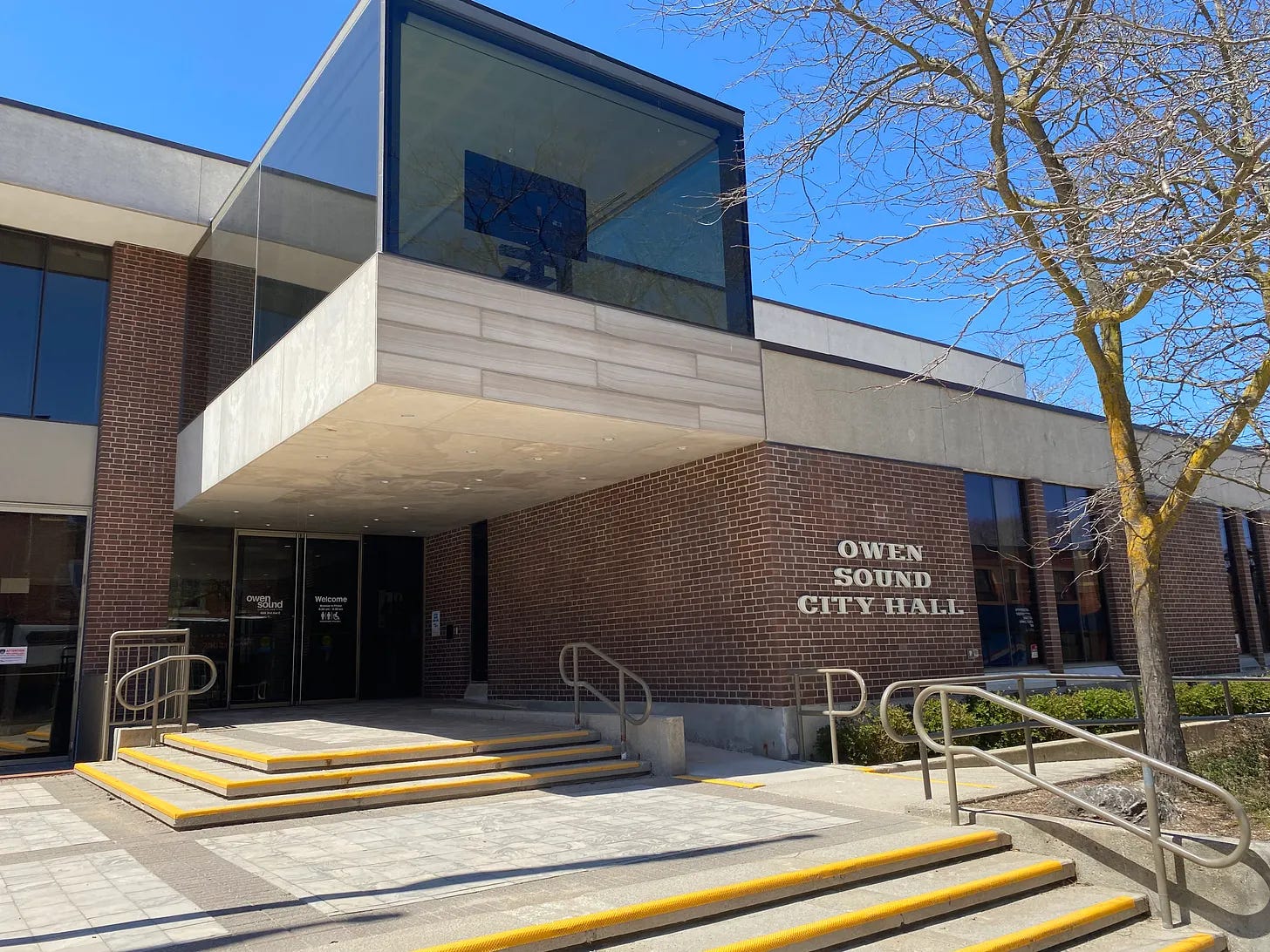
LETTER TO THE EDITOR
Dear Editor:
I have no personal involvement in the City’s bylaw prosecution of an Owen Sound resident accused of placing household garbage in a municipal waste bin. However, as a taxpayer, I question whether continuing this case represents a fair or responsible use of municipal resources.
From the information that has become public, the City’s case appears to rely primarily on the discovery of an Amazon shipping box bearing the resident’s address. While an address label may establish where a box originated, it does not establish who placed it in the municipal bin.
It is also understood that the resident has photographs and video showing homeless individuals regularly accessing her household garbage in the past, removing returnable bottles, and using whatever containers are available—including cardboard boxes—to carry them away.
If that evidence exists, it provides a reasonable alternative explanation that deserves serious consideration.
Canadian courts have long recognized that circumstantial evidence must do more than create suspicion. In R. v. Villaroman, the Supreme Court of Canada emphasized that where circumstantial evidence supports more than one reasonable inference, the burden of proof has not been met.
Likewise, in R. v. Sault Ste-Marie (City), the Court recognized that a person should not be held liable when an event occurs through the actions of a third party beyond their knowledge or control.
Whether or not the City ultimately believes it could succeed in court is not the only question. Council and the public should also ask whether pursuing this prosecution is in the public interest.
Every bylaw prosecution consumes staff time, legal resources, and taxpayer dollars. At a time when Owen Sound faces pressing challenges—including homelessness, housing affordability, infrastructure renewal, addiction, and economic development—is this really where those limited resources should be directed?
Residents expect municipal enforcement to be guided by fairness, proportionality, and common sense. Pursuing a case based on a single piece of ambiguous evidence, while credible evidence reportedly points to a reasonable alternative explanation, risks undermining public confidence in the City’s enforcement priorities.
Sometimes the strongest demonstration of good judgment is recognizing when further prosecution serves neither justice nor the public interest. Good government is not measured by how relentlessly it enforces every bylaw, but by its ability to exercise fairness, proportionality, and sound judgment.
Residents expect their elected officials and municipal staff to distinguish between deliberate misconduct and situations where the evidence leaves room for legitimate doubt.
When a prosecution is based on ambiguous circumstantial evidence and a credible alternative explanation exists, the responsible course is not simply to press ahead because a charge has been laid — it is to ask whether continuing truly serves the interests of justice, the community, and the taxpayers who ultimately bear the cost.
In this case, withdrawing the charge would demonstrate not weakness, but wisdom.
I have written members of council requesting that the city withdraw the prosecution of this resident. Hopefully, common sense will prevail.
Jim Hutton
Owen Sound
Letters to the Editor do not necessarily reflect the opinions or beliefs of The Owen Sound Current and its editor or publisher.
Related:

