How and Why Community Gardens Offer Climate Solutions
Simona Freibergova on how community gardens across Grey-Bruce build climate resilience, food security, and connection — one seed and one neighbour at a time.
COMMUNITY CONTRIBUTION
By Simona Freibergova, Earth & Community Activist, Initiator of the Community Garden Network in Grey Bruce Counties with the Sustainability Project
As communities across Canada face climate change, rising food costs, biodiversity loss, and increasing social isolation, a simple yet powerful solution is taking root: community gardens.
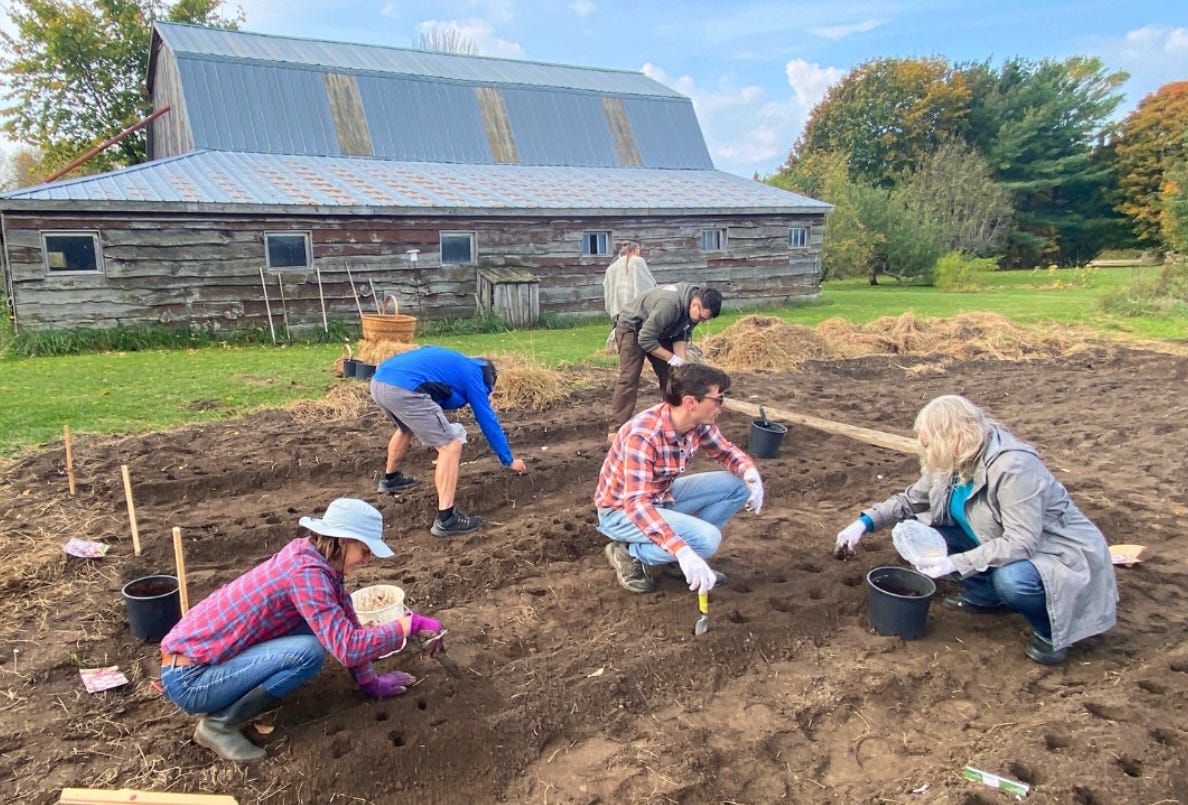
While often seen as places to grow vegetables, community gardens are much more. They are living ecosystems, outdoor classrooms, climate resilience hubs, and gathering spaces where people reconnect with both the earth and one another. In many ways, they demonstrate that some of the most effective climate solutions begin at the local level.
People often ask me how environmental sustainability can be incorporated into a community garden. I always smile and say, “In many ways, a community garden is sustainability in its purest form. To me, a community garden is where environmental sustainability comes to life every day in multiple actions.
Healthy soil is one of nature’s greatest climate allies. Through composting, mulching, and regenerative growing practices, community gardens build organic matter that stores carbon, improves water retention, reduces erosion, and helps land withstand drought and heavy rainfall. Every garden bed becomes an opportunity to restore ecological balance. Healthy, living soils capture and store carbon, absorb and hold rainwater, and reduce stormwater runoff that can contribute to erosion and flooding.
Community gardens also support biodiversity by creating habitat for pollinators, birds, beneficial insects, and soil microorganisms. Native flowers, herbs, fruit trees, and diverse vegetable crops provide food and shelter for species increasingly threatened by habitat loss. In a world of declining biodiversity, community gardens become small but meaningful sanctuaries for life.
Food security is another significant benefit. Most food travels thousands of kilometres before reaching our plates, generating emissions through transportation, storage, and packaging. Growing food locally, literally in your neighborhood, reduces food miles while providing fresh, nutritious produce to residents. Community gardens strengthen local food systems and help communities become more resilient in uncertain times.
Yet the impact extends far beyond food and the environment.
Climate awareness is also a social challenge. Communities that know one another, share resources, and work together are better prepared to face adversity. Community gardens bring people together across generations and backgrounds. They create opportunities to exchange
seeds, share knowledge, learn new skills, and build meaningful relationships. In a time when loneliness and social isolation are increasing, these connections matter.
Community gardens also improve physical and mental well-being. Gardening encourages movement, reduces stress, and provides a sense of purpose. For many participants, the garden becomes a place of healing, belonging, and hope.
They are also powerful educational spaces. Children and youth learn where food comes from, how ecosystems function, and why caring for the environment matters. These hands-on experiences cultivate environmental stewardship and inspire future generations to become active caretakers of the earth.
One often-overlooked aspect of community gardens is that they model a circular and regenerative way of living. Gardens are frequently built through creativity, repurposing, and community generosity. Raised beds may be constructed from reclaimed lumber, compost bins from salvaged pallets, and rain barrels from reused containers. Tools, seeds, plants, and materials are often shared or donated by residents and local businesses.
This culture of reuse reduces waste, conserves resources, and keeps costs low. More importantly, it strengthens community bonds.
Community gardens embody a simple but powerful principle: caring for the earth and caring for people are deeply interconnected. More than a collection of garden beds, a community garden is environmental sustainability in action—a living example of how local solutions can create lasting benefits for people, nature, and future generations.
They remind us that climate action doesn’t always require large investments or complex technologies. Sometimes it begins with neighbours coming together to share knowledge, resources, and responsibility for the land. Positive change truly can grow from the ground up—one seed, one neighbour, and one shared harvest at a time.
Thank you to sponsors of The Owen Sound Current Writers’ Fund, who make these community contributions possible. Contributions from the community do not necessarily reflect the opinions or beliefs of The Owen Sound Current and its editor or publisher.