

Hot Days in Grey Bruce Counties
John Anderson explores Grey County's rising number of hot days above 30°C — and what climate models project for the decades ahead.

Contributed by John Anderson
Measuring Temperature
Temperature is one of the most important observations scientists use to predict our weather. Typically, people want to know how hot or cold it is going to be that day and during the night. More importantly, how hot is it going to be due to climate change?
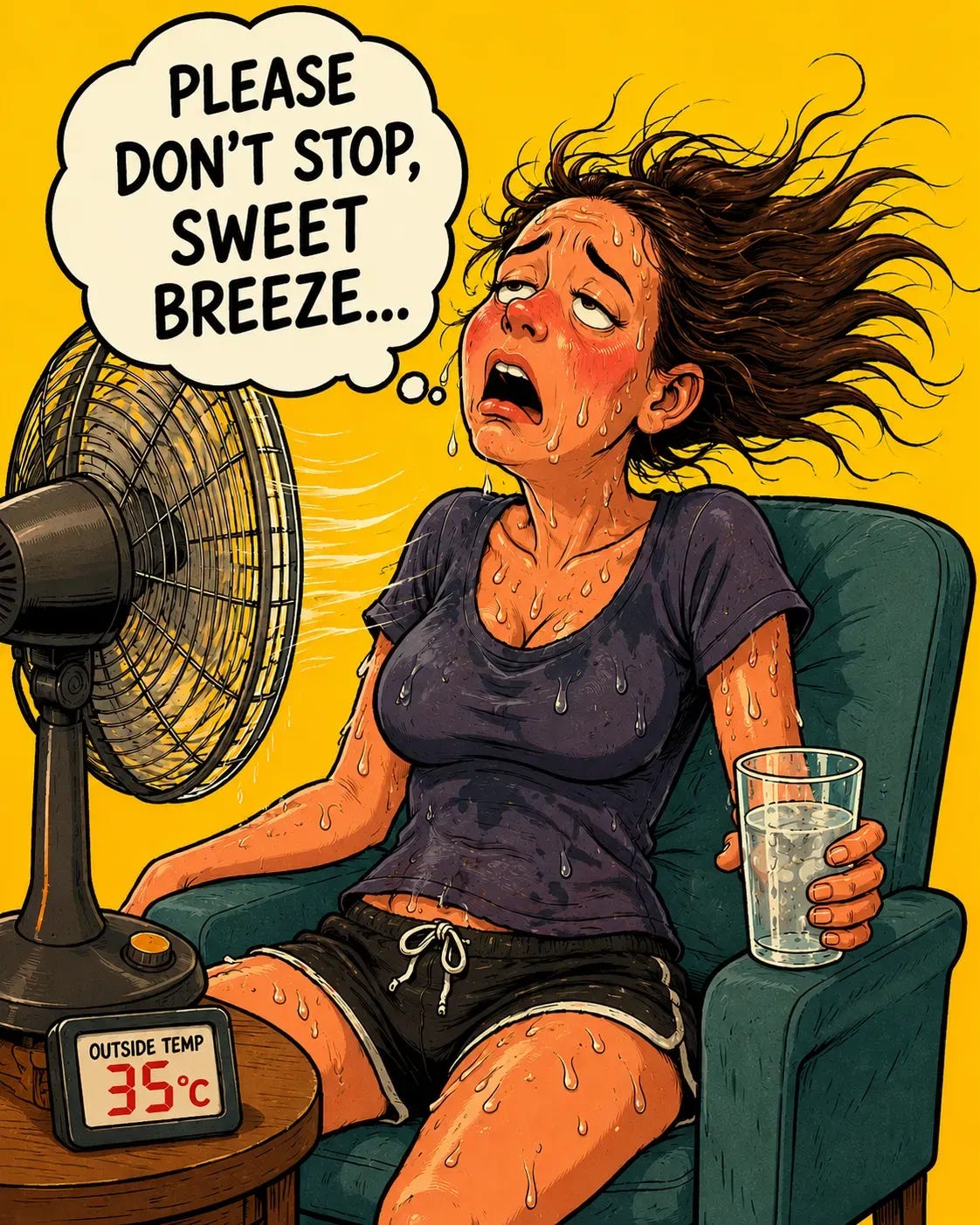
Canadians welcome the warm weather that summer brings after our cold winters. But sometimes it becomes too hot, and such conditions can seriously affect people’s health.
Climate scientists define hot weather in a number of ways; one of these is to measure and predict the number of days each year when temperatures rise to thirty degrees Celsius and above. Here, we will refer to this as Hot Days.
Modelling Temperature
Scientists have modelled different scenarios predicting potential future temperatures, helping us prepare for what’s ahead. One scenario, we call the High Carbon scenario and is often referred to as “business-as-usual”. It assumes we keep burning fossil fuels into the future and that our emissions keep rising until the end of the 21st Century.
Another commonly used scenario is the Moderate Carbon scenario – often referred to as “middle-of-the-road”. It assumes that global greenhouse gas emissions peak around 2040, then decline as a result of deliberate government policy interventions — such as promoting electric vehicle sales. It does not assume a radical decline in burning fossil fuels, but it does require meaningful action beyond current policies.
The two models are based on the modelling scenarios known as RCP8.5/SSP5-8.5 and RCP4.5/SSP2-4.5, respectively.
Hot Days
Over a period of fifty years, from the 1950s into the 1990s, we averaged three to four hot days each year. But in the 1990s, the number of hot days began to increase.
Now, in the 2020s, we average eleven to thirteen hot days each year, roughly three times more.
In the 1970s, Grey County saw three or four days above 30°C each summer. Today we see 11 to 13 — and the trend is accelerating.
By the 2030s, the number of hot days is expected to rise to about sixteen days each year. After the 2030s, the predictions begin to change, depending which course our society decides to take (Figure 2).
In the High Carbon scenario, the rate of increase accelerates sharply, reaching 29 hot days by 2050s and about 80 days by the end of the century (Figure 2).
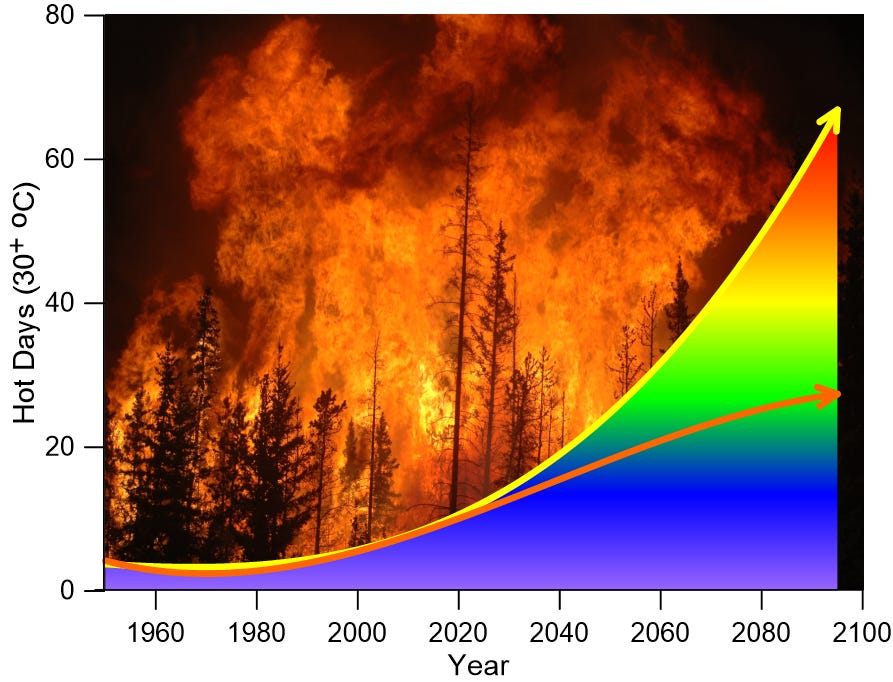
In the Moderate Carbon scenario, Hot Days continue to increase but at a much slower pace. The models predict 20 days in the 2050s and 34 days by the end of this century. That is still a lot of Hot Days but less than the High Carbon scenario.
Climate Change
Under either scenario, our climate is projected to change a lot in the coming decades. By the end of this century in the High Carbon scenario, our climate would resemble what it is like today in the southwestern United State of Arizona.
Under the Moderate Carbon scenario, our climate would resemble that of the mid-western state of Nebraska.
By the end of this century, Grey County could see 34 hot days each summer — or 80. The difference depends entirely on the choices we make today.
Climate Chaos
Scientists understand that as we put more energy into a physical system there is more disorder and less predictability. Modelling demonstrates that as temperatures increase in the future, our weather will become wilder and weirder.
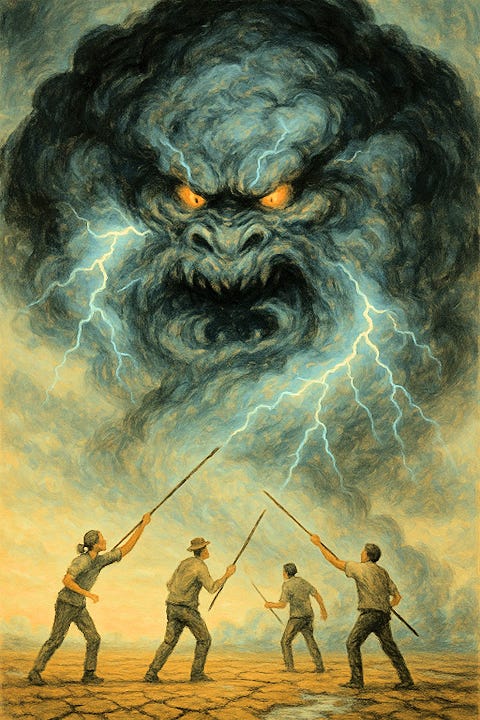
Wally Broecker, a famous climate scientist, is quoted saying, “The climate system is an angry beast and we are poking it with sticks” (Figure 3). What he was trying to convey was his sense that ever-increasing temperatures driven by ever increasing greenhouse gas emissions was going to result in more chaotic weather.
We are already seeing that.
Adapting to the New Weather
Many people struggle to ‘see’ that our climate is changing. When temperatures and precipitation increase slowly over many decades, the change seems gradual. People can get used to it; until extreme weather strikes.
Unfortunately, we are experiencing more extreme weather events as warming trends accelerate. People are starting to witness climate change in their lifetimes, as we experience conditions people living in Grey Bruce have never had before.
This will require significant and ongoing adaptation.
This is a story about how each of us, in our own way, will have to adapt to the new reality of increasing temperatures and more Hot Days. Many people and organizations are adapting to these new conditions.
We invite you to explore their stories in our Grey Roots Museum exhibit, Local Stories: Changing Weather, part of the Wild Weather exhibition, which runs from May 16, 2026 to September 5, 2026.
Each of us has a role to play in building a more resilient future for Grey Bruce.
Related:


