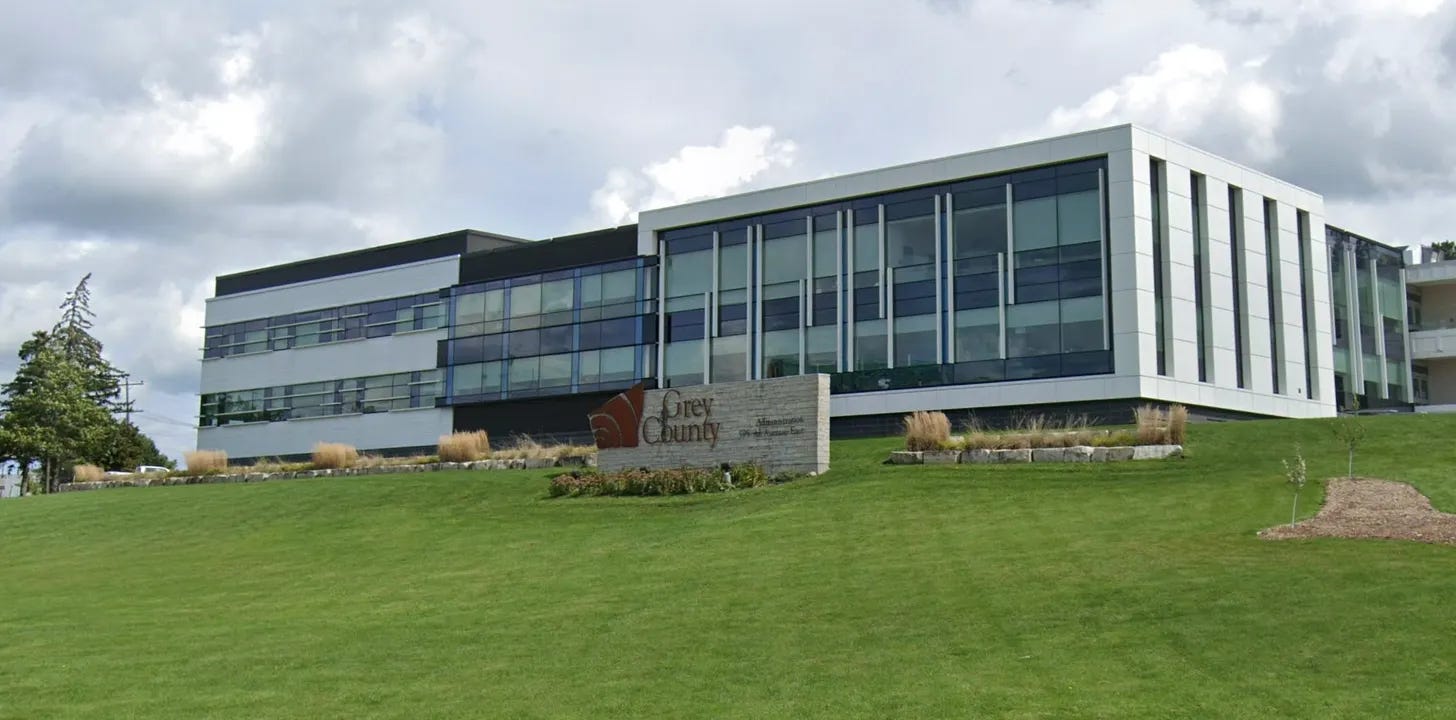
Grey County Rejects Committee Cuts, Weighs Pay for Volunteer Members
Grey County councillors have rejected a staff recommendation to dissolve four of the county’s committees and task forces before the next council term.
Grey County councillors have rejected a staff recommendation to dissolve four of the county’s committees and task forces before the next council term, voting the proposal down at the committee of the whole on May 28.
The recommendation came from the Clerk, reviewed by CAO Randy Scherzer. It called for dissolving the Agricultural Advisory Committee, the Community Services Committee, the Long Term Care Redevelopment Task Force and the Planning and Economic Development Advisory Committee, effective Sept. 25, 2026.
Two bodies required by provincial legislation — the Long Term Care Committee of Management and the Grey County Joint Accessibility Advisory Committee — were never part of the proposal.
Warder’s report framed the review as a guard against “committee creep,” the gradual accumulation of bodies whose work overlaps. It argued that the extra layer of committees reporting into the committee of the whole does not produce more effective or efficient decisions, and that staff time spent administering them could be better focused given the county’s growing project load.
The report pointed to alternatives, including direct staff engagement with sectors such as agriculture and regular reporting straight to the committee of the whole.
Councillors pushed back. Several argued the committees give them access to information and front-line staff expertise they would not otherwise reach, in a less formal setting that makes it easier to work through detail.
Councillor Nielsen described their value as information- and relationship-building, noting they let councillors hear from the staff doing the work rather than only department heads.
Deputy Warden Milne went further, questioning the point of appointing committees if council intends to revisit their recommendations at the council table regardless.
On a motion from Councillor Boddy, councillors split the recommendation into three. They received the report, and — after debate — directed staff to compile information on paying honoraria to public committee members for the incoming council to consider. They defeated the central recommendation to dissolve the four bodies.
The practical effect may be smaller than the vote suggests. Warder told councillors the optional committees were already scaling back and would be mostly wrapped up by the end of September, and that binding decisions on the county’s committee structure will fall to the incoming council. The new term begins in November 2026, with staff expecting to bring a broader governance report early in 2027.
Nothing in the defeated recommendation would have stopped a future council from re-establishing committees as needed.
Cost was not the driving issue. The report noted Grey County paid about $17,341 in non-legislated meeting per diems in 2025 and said any 2027 budget reduction from dissolving the committees would be slight, adding that cost was not the primary reason for the recommendation.
The honorarium question drew the sharpest split. Grey County currently pays public committee members only mileage for in-person meetings. Councillor Dobreen backed studying honoraria, noting Southgate pays its library and committee members a nominal amount, and argued it is unfair for appointed public members to sit alongside paid councillors without compensation for their time. Councillor Carleton agreed, citing the expertise public members bring.
Councillor Greig opposed the idea, saying he had never met a community volunteer who sought payment and objecting to remunerating volunteers with taxpayer money. The motion carried despite his objection; it directs staff only to research the question and report back to the next council, not to implement any payment.
Related: