

Council Approves Transit Schedule Change & New Traffic Safety Measures, Hears Pedestrian Signal Concerns
Owen Sound Council approves transit schedule trial and traffic by-law changes; staff respond to concerns about outdated pedestrian signals and limited short-term upgrade options.

Owen Sound City Council approved a series of transportation-related measures on Monday evening, including a trial of modified transit schedules and updates to the city’s traffic by-law, based on staff recommendations aimed at addressing operational challenges and sightline issues.
As recommended by the Operations Committee, Council approved a six-month trial of adjusted transit timing to begin February 1, 2026. The revised schedule introduces two 45-minute runs, one at 12:30 p.m. and another at 3:15 p.m., with the regular 30-minute service loop resuming at 4 p.m.
According to staff, the timing change is intended to help address current delays and better align route timing during the midday period. Staff also noted that performance will be monitored during the trial, and updates will be communicated through signage, the city website, and the mobile transit app.
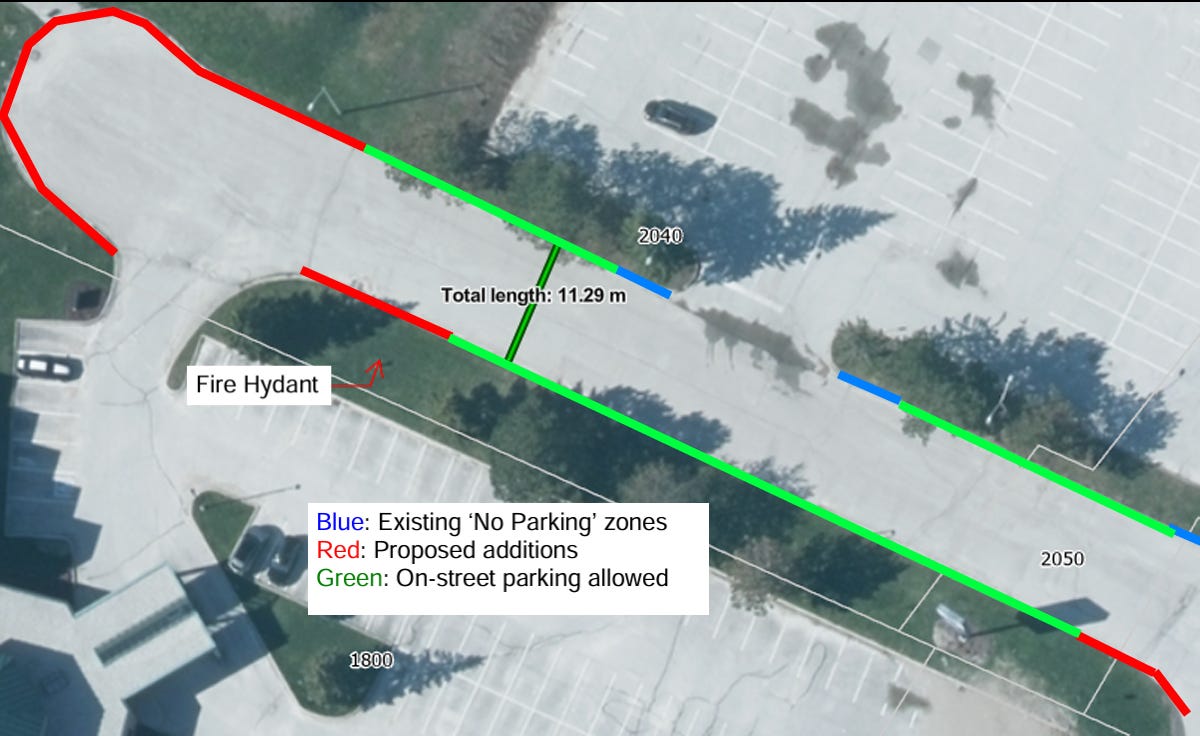
Council also approved several Traffic By-law amendments related to recently assumed roadways near Highway 26 and sightline concerns around the Bayshore Community Centre.
The changes include new on-street parking prohibitions, stop signs at three intersections, and a yield control at 1st Street East. Staff estimate the cost of related signage at approximately $6,500, to be covered within the existing signage budget.
During the meeting, Council also responded to a resident deputation heard at the Operations Committee in December regarding concerns about pedestrian infrastructure and inconsistent signal standards. They made no motions, but councillors and staff acknowledged that some pedestrian signals in the city are outdated and not fully compliant with current accessibility standards.
Deputy Mayor Scott Greig and Director of Public Works and Engineering Lara Widdifield stated that major upgrades are typically completed as part of broader road reconstruction projects due to their high cost.
However, Widdifield noted that in some cases, adjustments to signal programming—such as enabling walk signals without a button press—could be implemented where existing equipment allows. Staff also indicated that parts shortages and compatibility issues limit what changes can be made in the short term.
Council accepted all committee recommendations without amendments. Watch the video recording for further details.
Related:


